






At 2:17 a.m., your neighbor probably doesn’t care whether your dog is bored, anxious, territorial, or simply excited by a passing raccoon. They only hear barking. If you’re searching for the top bark collars, here’s the short answer: the most effective bark collars are adjustable, humane vibration or vibration-plus-sound models that match your dog’s temperament, size, and barking trigger. The best results come from collars that interrupt barking consistently without causing fear or distress. A proper dog collar comparison reveals that vibration collars work well for many dogs, while progressive correction collars tend to help persistent barkers when used responsibly alongside training.
What Is a Bark Collar and How Does It Actually Stop Excessive Barking?
A bark collar is a training device designed to detect barking and immediately provide a stimulus—such as vibration, sound, ultrasonic feedback, or static correction—to interrupt the behavior and encourage quieter habits.
Excessive barking is one of the most common behavioral complaints among dog owners. Dogs bark for communication, attention, fear, frustration, territorial defense, and boredom. Bark collars don’t solve the root cause by themselves, but they can help break repetitive barking cycles when combined with training and environmental management.
Modern bark collars use sensors that detect vocal cord vibration, sound frequency, or both. When barking is detected, the collar delivers a correction based on its programmed settings. Most premium models gradually increase intensity only when barking continues.
Before selecting a collar, it’s worth addressing any underlying skin sensitivity or irritation issues. Maintaining healthy skin with products recommended in this guide on dog shampoos for bacterial and fungal skin infections can improve overall collar comfort and wearability.
- Detects barking automatically
- Provides immediate feedback
- Interrupts repetitive behavior
- Supports training consistency
- Can reduce nuisance barking over time
Which Bark Collar Type Works Best for Most Dogs?
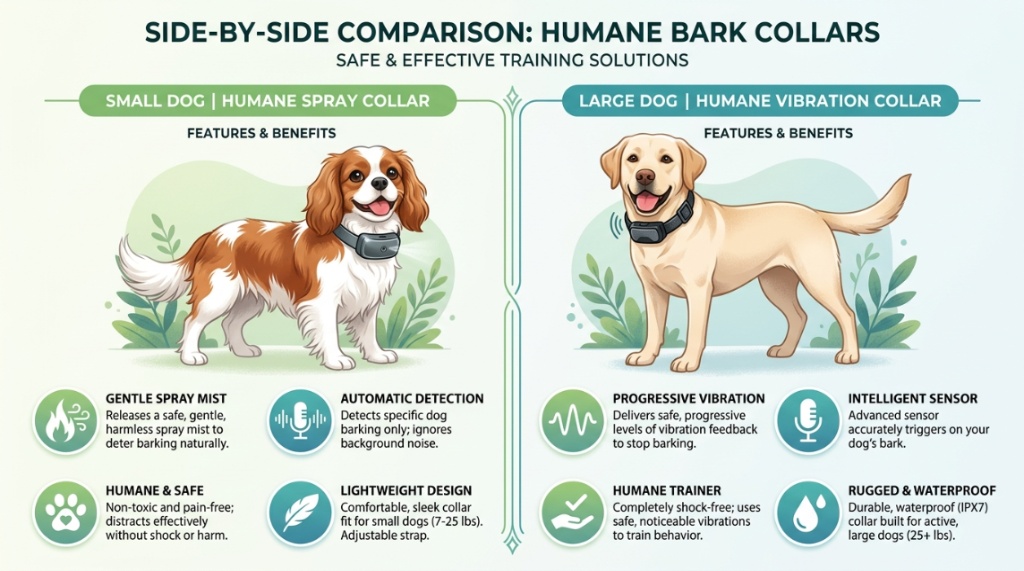
For most dogs, vibration bark collars provide the best balance of effectiveness, safety, and comfort.
Training experts increasingly recommend vibration-based systems because they gain a dog’s attention without causing pain. Many dogs quickly learn that silence prevents the vibration response.
Are Vibration Bark Collars Effective?
Yes. Vibration collars are highly effective for many small, medium, and large breeds. They are especially useful for dogs that respond well to interruption and redirection.
- Humane correction method
- Adjustable intensity levels
- Suitable for sensitive dogs
- No electrical stimulation required
- Works indoors and outdoors
Do Sound-Only Bark Collars Work?
Sometimes. Sound-only collars can help mild barkers but are often less effective for determined or highly excited dogs.
Because dogs eventually become accustomed to repeated sounds, these collars may lose effectiveness if used alone.
When Are Static Bark Collars Appropriate?
Static correction collars may help persistent barkers that ignore vibration or sound feedback, but they should be used carefully and responsibly.
Modern static collars use adjustable stimulation levels and safety shutoff systems. Responsible use is essential to avoid creating stress or confusion.
What Are the Top Bark Collars Dog Owners Consistently Recommend?
The most popular bark collars combine accurate bark detection, adjustable settings, safety features, and reliable battery performance.
| Collar Type | Best For | Correction Method | Pros | Cons |
|---|---|---|---|---|
| Vibration Collar | Most family dogs | Vibration | Humane, effective, adjustable | May not stop extreme barkers |
| Sound Collar | Mild barkers | Audible tone | Gentle approach | Limited effectiveness |
| Ultrasonic Collar | Noise-sensitive dogs | Ultrasonic sound | Non-contact correction | Mixed results |
| Static Collar | Persistent barkers | Static stimulation | Often highly effective | Requires careful use |
| Progressive Collar | Habitual barkers | Multiple correction levels | Adaptive response system | Higher cost |
What Features Matter Most in a Dog Collar Comparison?
The best bark collar isn’t necessarily the most expensive. Accuracy and adjustability matter more than extra features.
- Dual bark detection technology
- Progressive correction settings
- Waterproof construction
- Rechargeable battery
- Safety shutoff protection
- Multiple sensitivity levels
- Comfortable collar strap
How Do You Choose the Right Bark Collar for Your Dog’s Personality?

The ideal collar depends on why your dog barks, how sensitive they are, and how quickly they respond to feedback.
Dogs are individuals. A confident Labrador Retriever often reacts differently than a sensitive Cavalier King Charles Spaniel or a vocal Beagle.
For Anxious Dogs
Choose vibration or sound-based collars. Avoid strong corrections that may increase anxiety.
For Territorial Barkers
Progressive vibration systems typically work well because they consistently interrupt repetitive barking at fences, windows, and doors.
For High-Energy Breeds
Combine collar use with exercise, enrichment, and obedience training. Barking often decreases naturally when mental and physical needs are met.
For Small Dogs
Select lightweight collars designed specifically for smaller neck sizes and lower correction levels.
If you’re comparing regional recommendations and buyer preferences, this detailed resource covering the best anti-bark collar options for dog owners provides additional insights into popular choices and real-world performance.
Can a Bark Collar Solve Excessive Barking Permanently?
No. A bark collar is a training aid, not a permanent behavioral cure.
Long-term success comes from teaching alternative behaviors and addressing the reasons behind barking. Dogs that receive proper exercise, enrichment, socialization, and obedience training generally improve faster than dogs relying solely on correction devices.
What Causes Excessive Barking?
- Separation anxiety
- Territorial behavior
- Boredom
- Lack of exercise
- Attention-seeking habits
- Fear and stress
- Environmental triggers
- Medical discomfort
What Training Should Be Used Alongside a Bark Collar?
Reward-based training significantly improves outcomes.
- Reward calm behavior
- Teach the “quiet” command
- Provide daily exercise
- Reduce trigger exposure
- Use puzzle toys and enrichment
- Maintain consistent routines
Behavior specialists frequently report that dogs learn faster when positive reinforcement accompanies correction-based interruption methods.
Are Bark Collars Safe for Dogs?
When used correctly and according to manufacturer guidelines, modern bark collars are generally safe for healthy dogs.
Safety depends on proper fit, correct sizing, and responsible use. The collar should sit snugly but not tightly. Owners should inspect the neck regularly for irritation.
When Should You Avoid Bark Collars?
Avoid bark collars if your dog:
- Is under the recommended age
- Has neck injuries
- Has severe anxiety disorders
- Has skin infections or irritation
- Has medical conditions affecting behavior
- Has not been evaluated for sudden excessive barking
Can Bark Collars Cause Stress?
Yes, if used improperly. Excessive correction levels or poor timing may create confusion or stress. This is why gradual correction systems and proper training remain important.
How Long Does It Take for a Bark Collar to Start Working?
Most dogs show noticeable improvement within several days to two weeks when the collar is used consistently and correctly.
Results depend on:
- Dog temperament
- Correction type
- Consistency of use
- Training support
- Environmental triggers
- History of barking behavior
Some dogs respond after only a few barking incidents. Others require several weeks of reinforcement before developing reliable habits.
What Are Signs the Collar Is Working?
- Reduced barking frequency
- Shorter barking episodes
- Faster response to commands
- Increased calm behavior
- Better focus on owners
What Mistakes Do Dog Owners Make When Using Bark Collars?
The biggest mistake is expecting the collar to replace training.
Even the best bark collar cannot teach appropriate behavior by itself. Consistency, supervision, and reinforcement remain essential.
Common Bark Collar Mistakes
- Incorrect collar fit
- Using excessive correction levels
- Ignoring underlying anxiety
- Lack of exercise
- Inconsistent training routines
- Leaving collars on continuously
- Not reading manufacturer instructions
Successful owners treat bark collars as one part of a complete behavior-management strategy rather than a standalone solution.
Conclusion: Which Bark Collar Actually Works Best?
The answer is surprisingly simple: the best bark collar is the one that matches your dog’s temperament while supporting humane, consistent training. For most households, vibration bark collars provide the strongest combination of safety and effectiveness. Persistent barkers may benefit from progressive correction systems, while mild barkers often respond well to vibration or sound-only models.
A thoughtful dog collar comparison should focus on detection accuracy, adjustability, safety features, and comfort rather than marketing claims. When combined with exercise, enrichment, positive reinforcement, and proper management, today’s top bark collars can significantly reduce nuisance barking and improve life for both dogs and their owners.
Before making a final decision, compare available options, evaluate your dog’s specific behavior triggers, and choose a solution that supports long-term training success. For more guidance on selecting effective training tools and barking solutions, explore this comprehensive review of recommended bark collar choices for different dogs.
Frequently Asked Questions About Bark Collars
Do veterinarians recommend bark collars?
Many veterinarians support humane vibration-based bark collars when used responsibly as part of a broader training plan. Dogs with anxiety or medical issues should be evaluated before collar use.
Which type of bark collar is most humane?
Vibration bark collars are generally considered the most humane option because they interrupt barking without using static stimulation while still providing effective feedback.
Can bark collars stop barking completely?
No collar can guarantee complete silence. Bark collars reduce excessive barking by discouraging unwanted behavior, but training and environmental management remain necessary.
How many hours per day should a bark collar be worn?
Follow manufacturer recommendations. Most experts advise removing the collar periodically and avoiding continuous wear for extended periods to prevent irritation.
Do bark collars work on stubborn dogs?
Yes, many stubborn dogs respond well to progressive vibration or adjustable correction collars. Consistent training greatly improves results.
Are bark collars safe for puppies?
Most manufacturers recommend waiting until puppies reach a minimum age and weight requirement. Always follow product guidelines and consult a veterinarian if unsure.
Can dogs become dependent on bark collars?
No. When used correctly alongside training, dogs learn behavior patterns and often require less collar intervention over time.










+ There are no comments
Add yours