




Every parent knows the sinking feeling of watching their child zoom off on a scooter, wobble on a bike, or drop into a skateboard ramp for the first time. You want them to have fun, but you need them to be safe. The problem? Kids grow fast, their interests change even faster, and buying a dedicated helmet for every single activity can break the bank. You need one helmet that does it all without sacrificing protection. That is exactly where affordable kids multi sport helmets come into play. These versatile pieces of gear are designed to handle impacts from biking, skating, scootering, and rollerblading, all while keeping your wallet intact. In this guide, we will walk you through exactly what to look for, what to avoid, and how to make a smart purchase that keeps your child safe day after day.
What Makes a Helmet a “Multi-Sport” Helmet?
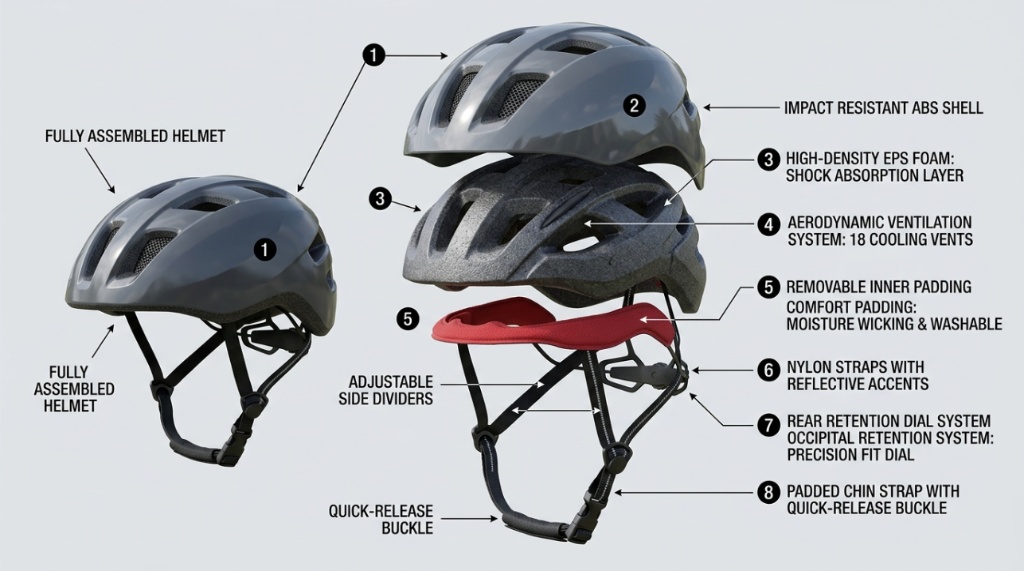
A multi-sport helmet is a single helmet certified to protect against the impact forces of multiple activities like cycling, skateboarding, and inline skating. Unlike a road bike helmet, which is streamlined for speed, or a ski helmet, which is insulated for cold weather, a multi-sport helmet features a hard outer shell and a thick EPS foam liner that can handle multiple impacts at various speeds.
Most multi-sport helmets feature a “hard shell” design rather than the “microshell” or “in-mold” construction often seen on high-end road cycling helmets. This is intentional. The hard outer plastic layer helps the helmet slide on rough pavement rather than catching, which reduces rotational forces on the neck. The interior EPS foam is usually thicker, providing better protection for repeated low-speed falls common in skateboarding or scootering. If you are buying one helmet to cover the playground, the skatepark, and the neighborhood bike ride, this is the style you need.
Key Characteristics of a True Multi-Sport Helmet
- Hard outer shell: Non-foam, non-fabric exterior that resists abrasion.
- Extended rear coverage: Protects the back of the head, which is a common impact zone in skateboarding falls.
- Certification labels: Look for CPSC (bicycle), ASTM F1492 (skateboard), and/or EN1078 (European standard).
- Thick EPS foam: Usually around 15-20mm thick for optimal energy absorption.
- Adjustable retention system: A dial or strap system that lets you customize the fit as the child grows.
Why Should You Buy an Affordable Kids Multi-Sport Helmet Instead of Several Specialized Helmets?
Buying one high-quality, affordable helmet is safer and more practical than owning three cheap, specialized helmets that may not fit properly. The single biggest risk factor for head injuries in children is a poorly fitting helmet, not the brand name.
Parents often assume that a $15 bike helmet and a $15 skate helmet offer better protection than a $35 multi-sport helmet. This is a misconception. Cheaper helmets often use lower-density foam and cheaper plastic buckles that can break in a fall. By investing in a single, well-made multi-sport helmet, you ensure that your child is wearing a properly fitted, high-quality protective device every single time they play. There is also the psychological factor: if you own one helmet that lives in the car or by the front door, your child is far more likely to wear it. If they have to dig out a specific helmet for each activity, the compliance rate drops significantly.
Furthermore, using a road bike helmet for skateboarding is dangerous. Road helmets are designed to absorb one major impact and then be replaced. Skateboard helmets are designed for multiple, lower-force impacts. A multi-sport helmet bridges this gap, offering a single, durable solution that handles both scenarios effectively.
Which Safety Certifications Are Non-Negotiable for a Kids Helmet?
You must look for CPSC (Consumer Product Safety Commission) certification as the absolute minimum. For a multi-sport helmet used for skateboarding or scootering, ASTM F1492 certification is highly recommended.
The CPSC certification ensures the helmet meets the federal safety standard for bicycle helmets in the United States. This covers impact attenuation (how well the helmet absorbs shock), strap strength, and peripheral vision. The ASTM F1492 certification goes further. It tests for multiple impacts at lower speeds, which simulates the repeated falls common in skateboarding and aggressive scootering. Some premium affordable kids multi sport helmets also carry the EN1078 certification, which is the European standard. If you see all three, you have a top-tier helmet.
How to Verify the Certification
- Check the inside of the helmet for a sticker that says “CPSC.”
- Look for “ASTM F1492” printed on the foam or the outer shell.
- Avoid helmets that only say “meets or exceeds” without a specific standard.
- Never buy a helmet without a certification sticker—it is a counterfeit or toy.
How Do You Ensure a Proper Fit for a Growing Child?
A proper fit is achieved when the helmet sits level on the head (not tilted back), the front edge is two finger-widths above the eyebrows, and the chin strap is snug enough that you can only fit one finger between the strap and the chin.
Getting the fit right is the most actionable step you can take. Kids will complain if a helmet is too tight or too loose. The solution is a helmet with an adjustable retention system. Look for a dial at the back of the head that can be turned to tighten or loosen the fit. This allows the helmet to “grow” with your child over a season or two. When trying on the helmet, put it on your child and shake their head gently. If the helmet shifts more than an inch in any direction, it is too big. If it leaves red marks on the forehead after five minutes, it is too small.
Remember that hair matters. A helmet fitted in the store with a ponytail might be loose when the hair is down. Always fit the helmet for the most common wearing scenario.
What Is the Difference Between In-Mold and Hard Shell Construction?
Hard shell construction is better for multi-sport use because the thick plastic outer layer protects the foam from cracks during rough play and allows the helmet to slide on pavement instead of catching.
In-mold helmets bond the outer polycarbonate layer directly to the EPS foam during manufacturing. This creates a lighter, more ventilated helmet that is excellent for road cycling. However, the outer layer is very thin. If a child drops an in-mold helmet on concrete, the foam can be damaged, compromising its protective ability. Hard shell helmets have a separate thick plastic cap that is riveted or glued over the foam. This makes the helmet slightly heavier, but much tougher. It is the standard for skateboarding and BMX racing. For a kid who is going to be ramming their helmet into the back seat of the car, dropping it on the driveway, and falling off a scooter, hard shell is the winner.
How Much Ventilation Does a Multi-Sport Helmet Need?
You need enough ventilation to prevent overheating during active play, but the fewer vents a multi-sport helmet has, the safer it generally is for skateboarding and scootering. Most multi-sport helmets have 8 to 12 vents.
There is a trade-off here. More vents mean more airflow, which keeps a child cool. However, each vent is a hole in the protective shell. Vents create stress points and can reduce the structural integrity of the helmet. More critically, on a skateboard or scooter, a helmet with large vents can catch on ramps or rails, potentially causing the head to snap back. For this reason, multi-sport helmets typically have smaller, more numerous vents than road bike helmets. Look for a helmet with evenly spaced, small vents (about 1cm wide) that provide good airflow without large gaps in the plastic shell. If your child will only use the helmet for biking in hot weather, more vents are fine. For skatepark use, fewer vents are better.
Can a Helmet Be Used for Biking One Day and Skateboarding the Next?
Yes, absolutely. That is the entire purpose of a multi-sport helmet. It is certified for both activities, so you can use it at the bike path on Saturday morning and the skatepark on Saturday afternoon without any safety compromise.
However, you must inspect the helmet between uses. Every time your child takes a hard fall (where they hit their head hard enough to see stars or hear a loud crack), the helmet should be retired. EPS foam is a single-use material in most cases. It compresses and hardens after an impact. Even if the helmet looks fine on the outside, the foam inside may be compromised. For multi-sport use, where falls are frequent, consider buying a new helmet every two years if your child uses it heavily, even if they never crash hard. Sweat, sunscreen, and general wear break down the foam over time.
How Much Weight Should a Kids Multi-Sport Helmet Be?
An affordable kids multi-sport helmet should weigh between 300 and 450 grams (10.5 to 16 ounces). Any heavier and the helmet will cause neck fatigue; any lighter and it may be an in-mold type that lacks durability.
Weight is a major factor in compliance. If the helmet is too heavy, kids will complain that it hurts their neck and they will take it off. Hard shell helmets are naturally heavier than in-mold helmets, but modern materials have closed the gap. Hold the helmet in your hand. If it feels like a brick, pass. If it feels flimsy and light like a toy, also pass. A good medium weight, around 380 grams, provides the necessary protection without being a burden.
What Features Should You Prioritize for a Child Who Wears Glasses?
For a child who wears glasses, prioritize a helmet with a low front rim and no side protrusions that interfere with the temple arms of the glasses. Also look for a soft, padded interior that does not push the glasses into the side of the head.
Many multi-sport helmets have an adjustable visor or a brim that can be pushed up to accommodate glasses. The most important feature is the fit around the temples. The helmet should sit high enough on the forehead so that the glasses sit naturally on the bridge of the nose. If the helmet pushes the glasses down, the child will constantly be adjusting them, which is a safety hazard. Some helmets have removable side pads that can be taken out to create more room for glasses arms.
How Do You Clean and Maintain a Multi-Sport Helmet?
Clean the helmet with mild soap and warm water. Remove the interior padding if possible and hand wash it. Never use harsh chemicals, solvents, or machine wash the foam or straps. Air dry only.
Maintenance extends the life of your helmet. After a sweaty day at the skatepark, the pads will start to smell and can harbor bacteria. Remove the velcro pads and wash them in the sink with a drop of dish soap. Rinse thoroughly and squeeze dry before reattaching. Wipe the hard outer shell with a damp cloth to remove dirt and grime. Store the helmet in a cool, dry place—never in a hot car. Extreme heat can degrade the foam adhesive and reduce impact protection. A helmet left in the trunk of a car during a 100-degree summer day may be unsafe to use.
When Should You Replace a Kids Multi-Sport Helmet?
You should replace a kids multi-sport helmet immediately after any significant impact that caused a visible dent, crack, or a hard knock to the head. You should also replace it every three to five years from the date of manufacture, even if it has never been in a crash.
Helmets are disposable safety equipment. The EPS foam degrades over time due to UV exposure, temperature fluctuation, and sweat absorption. A five-year-old helmet sitting in the garage may look new but could have lost 30% of its impact absorption capacity. For kids who are growing, you will likely need to replace the helmet for fit reasons long before the foam expires. However, if you have a hand-me-down helmet from an older sibling, check the manufacturing date stamped inside. If it is older than five years, recycle it and buy a new one. The affordable kids multi sport helmets on the market today offer better protection than anything made five years ago.
Frequently Asked Questions
Can my child use a multi-sport helmet for snow sports?
No. Multi-sport helmets are not designed for cold weather or the specific impact forces of skiing or snowboarding. They lack insulation and are not certified for the lower temperatures that make plastic brittle. Use a dedicated snow sport helmet for winter activities.
Are cheaper multi-sport helmets as safe as expensive ones?
Affordable helmets that carry CPSC and ASTM F1492 certifications meet the same safety standards as expensive ones. You pay more for lighter weight, better ventilation, and premium features like magnetic buckles, not necessarily for more safety.
Is it okay to buy a used helmet for my child?
No. You cannot see internal damage in a used helmet. The foam may be compressed from a previous fall. Always buy new for head protection to ensure the integrity of the foam and straps.
Does my child need a MIPS system in a multi-sport helmet?
MIPS (Multi-directional Impact Protection System) is beneficial but not required for skateboarding or scootering. It helps reduce rotational forces. Many affordable helmets now include MIPS, but a properly fitted CPSC-certified helmet is still very safe without it.
Can a toddler use a multi-sport helmet for a balance bike?
Yes, but ensure the helmet fits a smaller head circumference. Most multi-sport helmets start at 52 cm. Look for a “toddler” specific model that starts around 48 cm for children age 1 to 3.
How tight should the chin strap be?
The chin strap should be snug enough that you can only fit one or two fingers between the strap and the child’s chin. If the strap is loose, the helmet will roll off the head in a fall.
When prepping for a family day out, multi-sport helmets aren’t the only gear you need to plan ahead for. If you are traveling by air for your next family adventure, make sure you Find a Backpack That Fits Under Airplane Seat Easily to keep all your essentials within arm’s reach.
Conclusion
Choosing the best affordable kids multi-sport helmet for everyday safety does not have to be a complicated decision. You know the key points now: look for CPSC and ASTM F1492 certification, prioritize a hard shell construction for durability, and ensure the helmet fits properly with an adjustable retention system. Your child’s safety ultimately comes down to consistent use. A helmet that is affordable, comfortable, and versatile is a helmet they will actually wear every day, whether they are pedaling, pushing, or rolling. Do not overthink it. Pick a certified helmet, fit it correctly, and teach your child to care for it. The peace of mind you gain is worth every penny. Make the choice today to protect their most valuable asset—their growing brain.





+ There are no comments
Add yours