




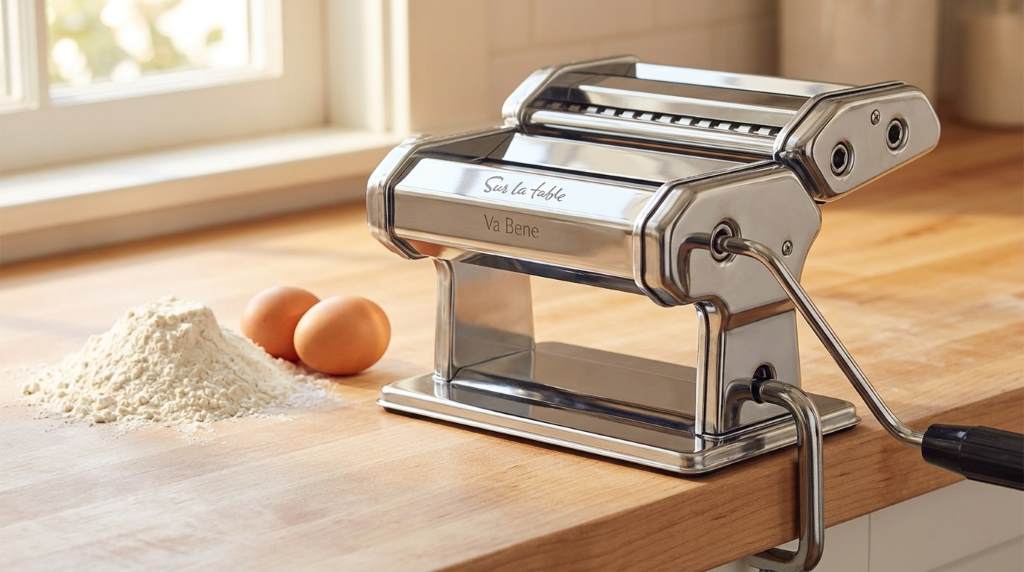
The Sur La Table Va Bene stands out because it combines adjustable control, sturdy construction, and hands-on pasta making. Its nine thickness settings and included cutters make this home pasta tool especially practical for beginners and experienced cooks. The machine also carries a 4.7 out of 5 rating from 21 Wayfair votes, showing strong buyer satisfaction.
Key Takeaways
- Versatile control: Nine thickness settings support different pasta styles and dough preferences.
- Useful cutters: The included attachments handle spaghetti and fettuccine without requiring separate equipment.
- Stable operation: The countertop clamp keeps the machine positioned during manual rolling.
- Durable design: Stainless steel construction gives the machine a substantial, kitchen-ready feel.
- Hands-on experience: Manual cranking gives cooks direct control over the pasta-making process.
- Strong value: It delivers essential pasta-making functions without the complexity of powered machines.
What Makes the Va Bene Different From Ordinary Pasta Makers?
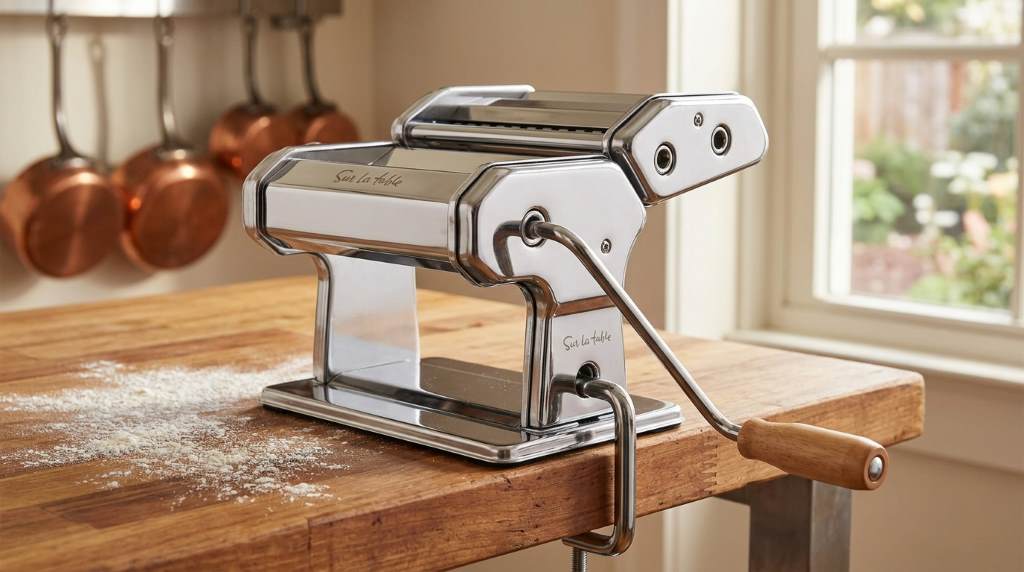
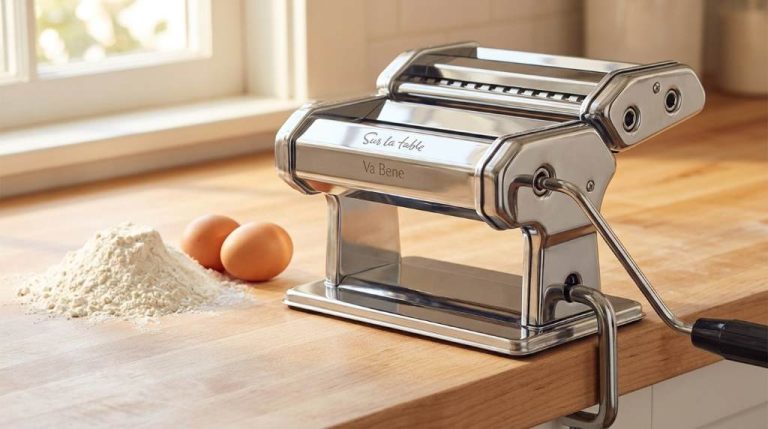
Many manual pasta machines perform the same basic task, yet their everyday usability can differ considerably. The Va Bene focuses on practical control rather than unnecessary complexity. Its stainless steel body, removable handle, and countertop clamp create a straightforward setup for home cooks.
More importantly, the machine gives users nine adjustable thickness settings for rolling pasta dough. That range lets you gradually refine sheets instead of relying on one fixed thickness. Therefore, cooks can adapt the dough for lasagna, stuffed pasta, or thinner noodles.
The machine also includes cutters designed for two familiar pasta shapes. You can switch between spaghetti and fettuccine without purchasing separate cutting equipment. For households experimenting with fresh pasta, that versatility keeps the initial setup pleasantly simple.
Another useful detail involves countertop stability during operation. The included clamp anchors the machine while you turn the removable handle. As a result, both hands can focus more effectively on feeding and guiding the dough.
That practical design philosophy separates the Va Bene from novelty-focused kitchen gadgets. Instead of adding complicated controls, it concentrates on the movements that actually shape fresh pasta.
For another perspective on essential kitchen equipment, this hidden gem cordless hand guide shows how compact tools can simplify everyday tasks. The same principle applies here, because useful design matters more than excessive features.
How the Nine Thickness Settings Improve Pasta Making
Thickness control represents one of the most important features of any manual pasta roller. Different recipes require different sheet textures, and dough thickness directly affects cooking performance. The Va Bene addresses that need through nine selectable settings.
Beginners can start with a thicker setting while learning how the dough responds to pressure. Then, they can gradually move toward thinner settings as their technique improves. This approach makes the learning curve easier to manage without sacrificing experimentation.
For stuffed pasta, consistent sheets help create cleaner edges and more predictable portions. Meanwhile, lasagna requires sheets with enough structure to hold sauce without becoming excessively heavy. Therefore, adjustable rolling gives cooks more control over the final dish.
Consistency also matters when cooking fresh noodles. Uneven dough can produce pieces that finish cooking at different times. By rolling repeatedly at controlled settings, you can create more uniform pasta and improve the overall texture.
However, the thickness dial cannot compensate for poorly prepared dough. You still need the right hydration, adequate kneading, and sufficient resting time. The machine works best when you treat dough preparation and rolling as one connected process.
Experienced cooks can also use the settings creatively. You might choose thicker sheets for hearty sauces and thinner sheets for lighter preparations. Consequently, the Va Bene becomes a tool for adjusting texture rather than simply producing noodles.
Build Quality and Everyday Countertop Stability
A pasta maker needs more than attractive styling because manual rolling creates repeated mechanical pressure. The Va Bene uses stainless steel construction to provide a sturdy foundation for regular kitchen use. Its Juniper Green finish also gives the machine a distinctive appearance.
The included clamp plays an equally important role in practical performance. Without reliable anchoring, the machine can shift while you feed dough through the rollers. A stable workstation makes the rolling process smoother and reduces unnecessary interruptions.
The removable handle further supports the machine’s simple operating system. You turn the handle manually while guiding the dough through the selected roller. This direct arrangement keeps the machine easy to understand from the first session.
Storage also deserves consideration before buying any countertop appliance or tool. A manual machine usually requires less infrastructure than an electric pasta maker. You can therefore use it when you want fresh pasta without dedicating permanent counter space.
Still, stainless steel does not mean you should neglect maintenance. Flour residue can accumulate around rollers, cutters, and other moving areas. Cleaning after each session helps prevent buildup and keeps the mechanism ready for future batches.
For broader pasta equipment comparisons, this Marcato pasta machine guide provides useful context about another established manual pasta-machine approach. Comparing designs helps you identify which features actually match your cooking habits.
What Can You Make With the Va Bene?
The Va Bene supports more than basic spaghetti preparation. Its roller system can create pasta sheets for lasagna and other recipes requiring flattened dough. The cutters then transform rolled sheets into familiar noodle shapes.
Spaghetti provides an obvious starting point for first-time users. Fettuccine offers a wider noodle that pairs naturally with richer sauces. Meanwhile, flat sheets can support layered dishes or handmade stuffed pasta.
The machine can also help prepare dough for dumpling-style applications. However, recipe-specific thickness requirements still matter for successful results. Always adjust the roller setting according to the intended recipe rather than choosing one universal setting.
Fresh pasta also gives you more control over the final meal. You can adjust thickness, portion size, ingredients, and cooking time. Additionally, homemade dough lets you experiment with herbs, vegetables, and other flavor additions.
That flexibility makes the machine particularly appealing for cooks who enjoy customization. Instead of buying several specialized gadgets, you can build different dishes around one core rolling system.
How to Get Better Results From Your First Batch
The machine cannot rescue dough that feels excessively wet or dry. Aim for dough that feels firm, cohesive, and workable before introducing it to the rollers. Resting the dough also helps relax gluten and makes rolling more manageable.
Before rolling, divide the dough into manageable portions. Smaller pieces pass through the rollers more easily and give you greater control. Keep unused portions covered so their surfaces do not dry while you work.
Start with a wider setting before progressively reducing thickness. Feeding very thick dough directly into a narrow setting can strain your technique. Gradual reduction creates smoother sheets and usually produces more predictable results.
Dusting requires restraint because excessive flour can make finished pasta tough. Use enough flour to prevent sticking without coating every surface heavily. You should also remove excess flour before cooking whenever practical.
When cutting noodles, keep the sheet reasonably straight and evenly rolled. A consistent sheet helps the cutter produce strands with similar dimensions. After cutting, separate the noodles gently to prevent clumping.
Finally, cook a small test portion before preparing the entire batch. Fresh pasta can cook quickly, especially when you roll it thin. Testing lets you adjust cooking time without compromising the main serving.
Cleaning and Maintenance Without Complicating the Routine
Good maintenance begins with removing loose flour soon after pasta making. Allowing dough residue to harden can make cleaning more difficult around moving components. A dry cleaning approach usually works better than introducing unnecessary moisture.
Never treat the machine like ordinary dishwasher-safe cookware unless the manufacturer specifically permits it. Pasta rollers contain mechanical areas that require careful handling. Instead, follow the supplied care instructions and keep water away from sensitive mechanisms.
Inspect the cutters and rollers after each use. Look for trapped dough, flour accumulation, or anything that could interfere with movement. Early cleaning prevents small residue problems from becoming recurring maintenance issues.
Storage conditions also influence long-term usability. Keep the machine somewhere dry and protected from unnecessary humidity. Store the handle and other removable components together so the machine remains ready for the next session.
Who Should Buy the Sur La Table Va Bene?
The Va Bene makes sense for cooks who genuinely want to prepare fresh pasta at home. It suits beginners because the controls remain intuitive and mechanically straightforward. Experienced cooks can also appreciate the ability to fine-tune dough thickness manually.
Families may find it especially engaging because pasta making becomes an interactive cooking activity. Children can watch the dough transform while adults manage the machine safely. That process can turn an ordinary dinner into a memorable kitchen project.
It also works well for cooks who prefer manual tools over electric appliances. You control the speed, pressure, feeding, and thickness throughout the process. Therefore, the machine provides a more tactile experience than automated pasta makers.
However, convenience-focused users should consider its manual operation carefully. You must turn the handle while simultaneously feeding and guiding the dough. If speed and automation matter most, an electric model may suit your routine better.
The Va Bene also makes sense for shoppers who value focused functionality. You receive rolling capability, adjustable thickness, cutters, a handle, and a clamp. That combination covers the core tasks without requiring a complicated control panel.
Va Bene Compared With More Advanced Pasta Machines
Premium pasta machines often introduce motors, additional attachments, or broader automation. Those features can reduce physical effort, but they can also increase cost and complexity. The Va Bene takes the opposite approach by keeping the process manual and direct.
That difference matters when deciding what you actually need. If you make pasta occasionally, manual operation may provide enough capability without unnecessary expense. Conversely, frequent large-batch cooking could justify investing in powered equipment.
The Va Bene also encourages better technique because you control each stage personally. You feel resistance as dough passes through the rollers. Over time, that feedback can help you understand hydration, gluten development, and rolling pressure.
Therefore, the best machine depends on your cooking priorities rather than specifications alone. Choose the Va Bene when control, simplicity, and hands-on preparation matter. Choose automation when convenience and production speed matter more.
Is the Va Bene Worth Adding to Your Kitchen?
The Sur La Table Va Bene earns attention because it solves the essential problems of home pasta making. It provides adjustable thickness, useful cutters, stable clamping, and durable stainless steel construction. More importantly, those features work together rather than existing as disconnected extras.
Its strongest advantage comes from balance. The machine remains approachable for beginners while offering enough control for cooks who want to refine their technique. That combination gives it broader appeal than many highly specialized pasta tools.
There are limitations, particularly for people who dislike manual cranking. You also need to clean and store the machine carefully after each use. Nevertheless, those tradeoffs remain reasonable for cooks who enjoy traditional pasta preparation.
If fresh pasta appeals to you, the Va Bene deserves a place on your shortlist. Start with simple fettuccine, learn the roller settings, and gradually explore more ambitious recipes. Choose the Sur La Table Va Bene when you want practical control and satisfying hands-on pasta making.
Frequently Asked Questions
Is the Sur La Table Va Bene pasta maker good for beginners?
Yes, its straightforward manual design and nine thickness settings make it approachable for first-time pasta makers.
What pasta shapes can the Va Bene make?
It can roll sheets and includes cutters for spaghetti and fettuccine, while sheets support lasagna and dumpling applications.
Does the Va Bene pasta maker require electricity?
No, the Va Bene operates manually with a removable hand crank rather than an electric motor.
How many thickness settings does the Va Bene have?
The machine provides nine adjustable settings, allowing cooks to control dough thickness for different recipes.
Is the Va Bene suitable for frequent pasta making?
Yes, its stainless steel construction and practical design make it suitable for regular home pasta sessions.
Final Verdict
The Sur La Table Va Bene stands out by keeping fresh pasta making focused, flexible, and approachable. Its strongest qualities include adjustable rolling, useful cutters, countertop stability, and durable construction.
Rather than overwhelming cooks with automation, it emphasizes technique and control. If you want homemade pasta to become an enjoyable kitchen routine, this manual machine offers a compelling starting point.
Ready to make fresh pasta at home? Add the Va Bene to your kitchen setup and start with a simple fettuccine recipe. Once you master the basics, experiment with thinner sheets, stuffed pasta, and creative homemade variations.






+ There are no comments
Add yours