




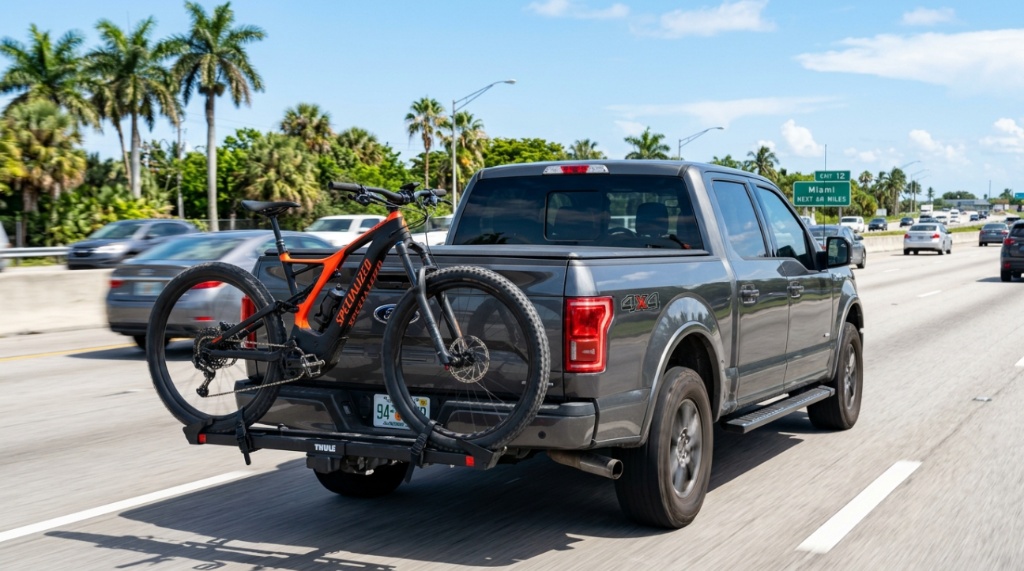
Florida offers some of the best riding terrain in the country, from the flat coastal highways to the winding trails of the central highlands. But getting your heavy bike to those destinations can be a challenge, especially when you’re dealing with the heat, humidity, and long distances between launch points. If you’ve ever wrestled a 60-pound e-bike onto a flimsy trunk rack or watched your rear suspension bounce down I-95, you know exactly why this matters. This guide covers everything you need to know about how to transport heavy bikes safely in Florida, including rack selection, weight limits, legal considerations, and practical tips for protecting both your bike and your vehicle.
Why Heavy Bikes Need a Different Transport Approach
Heavy bikes—typically defined as anything over 45 pounds—behave differently during transport than standard road bikes. The extra mass creates more stress on mounting points, increases sway at highway speeds, and amplifies the impact of every bump and pothole. A standard trunk-mounted rack rated for 35 pounds per bike simply isn’t built for this kind of load.
Beyond the rack itself, the bike’s frame geometry matters. Many heavy bikes are e-bikes with bulky batteries and motors, or downhill mountain bikes with long-travel suspension. These features shift the center of gravity and make the bike more difficult to secure properly. What works for a 22-pound carbon road bike often fails with a 55-pound electric mountain bike.
Understanding Weight Ratings vs. Real-World Loads
Manufacturer weight ratings are the starting point, not the final word. A rack rated for 60 pounds per bike might handle that weight in ideal conditions, but Florida’s heat can affect plastic components over time, and the constant vibration of highway driving adds stress that static testing doesn’t fully replicate. As a rule of thumb, stay at or below 80 percent of the stated maximum capacity for regular use. That means if a rack says 60 pounds per bike, you should feel comfortable with bikes up to about 48 pounds.
Also consider the total tongue weight of your hitch. Most Class III hitches handle 500 pounds of tongue weight, but Class I and II hitches are often limited to 200–350 pounds. The rack itself weighs 30–60 pounds, so factor that into your calculations before loading up.
Choosing the Right Rack Type for Heavy Bikes
Not all racks are created equal when it comes to hauling heavy loads. Here’s how the main categories stack up for Florida riders who need to move substantial bikes.
Hitch-Mounted Racks: The Clear Winner
Hitch racks are the most reliable option for heavy bikes. They attach directly to your vehicle’s frame through the receiver, distributing weight more evenly than trunk straps or roof mounts. Platform-style hitch racks support the bike by its tires, which is ideal for heavy bikes because it avoids putting stress on the frame. This is especially important for e-bikes with step-through frames or full-suspension mountain bikes where clamping the top tube can damage internal routing or carbon components.
Look for features like tilting mechanisms that allow you to access your trunk or tailgate without removing the bikes, and integrated locks that secure both the rack to the hitch and the bikes to the rack. In Florida, where salt air from coastal rides can accelerate corrosion, choose a rack with a powder-coated finish or aluminum construction.
Trunk Racks: Avoid for Heavy Bikes
Trunk racks attach to your vehicle with straps and hooks that grip the edges of the trunk or hatch. They work fine for lightweight bikes, but they’re a poor choice for heavy loads. The straps can stretch, the hooks can slip, and the added weight can damage your vehicle’s sheet metal or spoiler. Additionally, trunk racks often obscure your taillights or license plate, which is both unsafe and illegal in Florida.
If you already own a trunk rack and want to use it for a heavy bike, check the weight rating carefully. Most max out at 30–35 pounds per bike. If your bike exceeds that, don’t risk it. The cost of a new rack is far less than the cost of repairing your car or replacing your bike after a highway failure.
Roof Racks: Convenient but Physically Demanding
Roof racks keep bikes out of the way and allow full access to your trunk, but they require lifting the bike overhead. For a 55-pound e-bike, that’s a significant physical challenge, especially in Florida’s summer heat. You also need to account for increased wind resistance and the risk of forgetting your bike is on the roof when entering a parking garage. Roof racks work best for riders who are physically capable of the lift and who don’t mind the added fuel consumption.
Florida-Specific Considerations for Bike Transport
Transporting bikes in Florida comes with unique challenges that riders in other states rarely think about. Understanding these factors will help you make better decisions and avoid costly mistakes, Before hitting the highway with your heavy gear, make sure your equipment is up to the task by checking out how to Find an Affordable Mountain Bike That Actually Lasts.
Heat and Humidity Effects
Florida’s climate is brutal on both bikes and racks. Prolonged exposure to UV rays can degrade plastic straps and rubber pads, making them brittle and prone to failure. Humidity accelerates corrosion on metal components, especially if you ride near the coast where salt spray is common. Before every trip, inspect your rack for signs of wear: cracks in plastic, rust on bolts, or fraying on straps. Replace any questionable components before they fail on the road.
For the bike itself, consider removing the battery from an e-bike during transport. Extreme heat inside a closed vehicle or even in direct sunlight on a rack can degrade battery performance and shorten its lifespan. Store the battery in a cool, shaded area inside your vehicle whenever possible.
Distance and Driving Conditions
Florida is a large state, and getting to many popular riding destinations means long highway drives. The combination of high speeds, heavy traffic, and frequent construction zones creates constant vibration and sudden braking. A properly secured bike should not move more than a fraction of an inch when you push on it firmly. If you feel any play, stop and re-secure before continuing.
Also be aware of Florida’s toll roads and turnpikes. Some toll plazas have height restrictions or narrow lanes that can be problematic with bikes on a roof rack. Hitch-mounted racks generally don’t affect your vehicle’s clearance, which is another reason they’re preferred for heavy bikes.
Step-by-Step Loading and Securing Process
Proper technique matters just as much as proper equipment. Follow these steps every time you load a heavy bike onto a hitch rack.
- Park on level ground and engage your parking brake. This prevents the vehicle from rolling while you’re loading.
- Clean the hitch receiver and inspect the rack’s locking mechanism. Remove any dirt or debris that could prevent a snug fit.
- Insert the rack into the receiver and secure it with the pin or bolt. Make sure there’s no play between the rack and the receiver. If there is, use an anti-rattle device to eliminate it.
- Lift the bike onto the rack using your legs, not your back. For very heavy bikes, consider using a small step stool or ramp to reduce the lifting height.
- Position the bike in the wheel trays or against the frame supports, making sure the heaviest part of the bike (usually the motor or rear wheel) is closest to the vehicle.
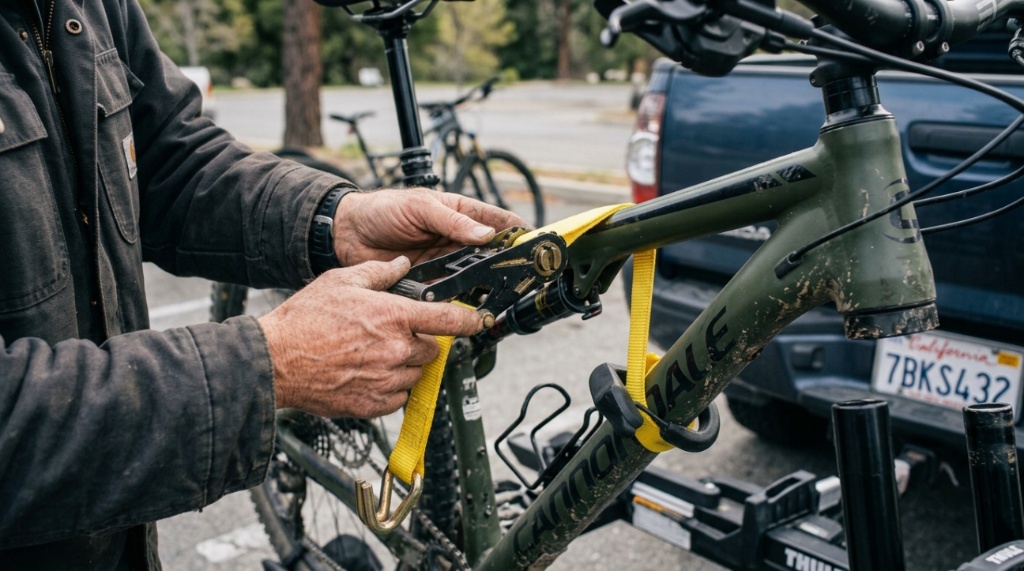
- Secure the wheels first with the provided straps or clamps. Tighten until the wheels cannot move, but avoid over-tightening to the point of damaging the rims.
- Add a frame strap if your rack supports it. This provides a secondary point of contact and reduces sway.
- Test for stability by pushing the bike firmly in all directions. It should not move more than a few millimeters.
- Double-check all straps after driving 10–15 minutes. Straps can loosen as they settle, especially with heavy loads.
Common Loading Mistakes to Avoid
Even experienced riders make errors when loading heavy bikes. Here are the most common ones and how to avoid them.
Ignoring the center of gravity. Heavy bikes have their mass concentrated in specific areas. If you load a bike with the motor or battery on the outside edge of the rack, it will create more sway and put uneven stress on the mounting points. Position the heaviest components closest to the vehicle.
Skipping the safety cable. Many hitch racks come with a safety cable or chain that attaches to your vehicle’s hitch loop. This prevents the rack from dropping to the ground if the main pin fails. Always use it, even for short trips.
Forgetting about license plate visibility. If your rack obscures your license plate or taillights, you need a light bar or a rack with an integrated plate mount. Florida law requires a clearly visible license plate, and getting pulled over for an obscured plate is an unnecessary hassle.
Legal Requirements and Safety Regulations in Florida
Florida doesn’t have specific laws governing bike racks themselves, but general vehicle safety laws apply. Your load must be secure, and you can be cited for an unsafe load if a bike comes loose or falls onto the roadway. Additionally, your license plate and taillights must remain visible, and your vehicle’s width cannot exceed legal limits with the rack and bikes attached.
One often-overlooked regulation involves the rearview visibility requirement. Florida law requires a clear view to the rear of your vehicle. If your bikes completely block your rear window and you don’t have functioning side mirrors, you could be cited. Most modern vehicles have side mirrors that satisfy this requirement, but it’s worth checking before you load up.
Protecting Your Bike During Transport
Beyond just securing the bike, you need to protect it from damage during transit. Heavy bikes are expensive, and the last thing you want is to arrive at the trailhead with a scratched frame or a bent rotor.
Frame Protection and Padding
Use frame pads or pipe insulation foam on any contact points where the rack touches your bike. This is especially important for carbon frames, which can be damaged by concentrated pressure. Even aluminum and steel frames benefit from padding, as the vibration of highway driving can cause paint wear over time.
For full-suspension bikes, consider using a frame strap that compresses the suspension slightly. This reduces movement and prevents the bike from bouncing excessively. Just be careful not to compress the suspension so much that it puts stress on the frame or components.
Wheel and Rotor Protection
If your rack holds the bike by the wheels, make sure the straps or clamps don’t contact the brake rotors. A bent rotor is a common transport injury that can be expensive to fix. Use wheel chocks or spacers that keep the bike upright without touching the braking surfaces.
For bikes with thru-axles, check whether your rack requires an adapter. Many racks are designed for quick-release skewers and need an adapter to accommodate the larger thru-axle diameter. Using the wrong adapter can damage your fork dropouts.
Maintenance and Long-Term Care for Your Rack
A quality hitch rack is an investment that should last for years if properly maintained. In Florida’s environment, that means regular cleaning and inspection.
After every trip, rinse the rack with fresh water to remove salt, sand, and road grime. Pay special attention to moving parts like tilting mechanisms and locking pins. Apply a silicone-based lubricant to these components every few months to keep them operating smoothly.
Inspect all straps and rubber components for signs of UV damage or cracking. These parts are inexpensive to replace, and doing so proactively is far cheaper than dealing with a failure on the road. Store the rack indoors when not in use, especially during the summer months when UV exposure is most intense.
Frequently Asked Questions
Can I use a standard hitch rack for an e-bike?
Yes, but only if the rack is specifically rated for the weight of your e-bike. Many manufacturers now offer e-bike-rated racks with higher weight capacities and reinforced construction. Check the rating before purchasing, and remember that the battery and motor add significant weight.
What is the maximum weight for a hitch bike rack?
Most hitch racks are rated for 35–60 pounds per bike, with some heavy-duty models supporting up to 80 pounds. The total capacity depends on the rack design and your vehicle’s hitch rating. Always verify both ratings before loading.
Is it safe to transport a bike on a roof rack in Florida?
Roof racks are safe if properly installed and if you can physically lift the bike. However, the heat and UV exposure in Florida can be hard on both the bike and the rack. Hitch racks are generally more practical for heavy bikes.
Do I need a special license to tow a bike rack in Florida?
No, a standard driver’s license is sufficient for a bike rack. The rack and bikes are not considered a trailer under Florida law. However, you must ensure the load is secure and does not obstruct your view or your vehicle’s lights.
How often should I check the straps on my bike rack?
Inspect the straps before every trip and replace them at the first sign of wear. Florida’s UV exposure can degrade straps faster than in other climates, so err on the side of caution. A strap failure at highway speed can be catastrophic.
Can I leave my bike on the rack overnight?
It’s not recommended. Leaving a bike on a rack exposes it to theft, weather damage, and UV degradation. Additionally, the constant weight on the rack and hitch can cause premature wear. Unload your bike whenever you’re parked for an extended period.
Conclusion
Transporting heavy bikes safely in Florida comes down to three things: the right equipment, proper technique, and regular maintenance. A quality hitch-mounted rack rated for your bike’s weight is the foundation of safe transport, but it’s only effective if you load the bike correctly and inspect everything before each trip. Pay attention to Florida’s unique challenges—heat, humidity, salt air, and long distances—and adjust your approach accordingly. Remove e-bike batteries during transport, use frame protection, and never exceed your rack’s weight rating. With the right preparation, you can get your bike to any trailhead or riding spot in the state without damage to your bike, your vehicle, or your peace of mind.






+ There are no comments
Add yours