

You’ve been eyeing mountain biking for months, but every time you check prices, your wallet winces. Entry-level bikes feel flimsy, mid-range options drain your savings, and you’re left wondering if a budget-friendly ride can handle real trails without falling apart after one season. The frustration is real, and you’re not alone. The good news? Finding an affordable mountain bike that genuinely lasts isn’t about luck—it’s about knowing exactly what to look for, where to compromise, and where to invest. This comprehensive mountain bike buying guide cuts through the noise and gives you a clear, actionable roadmap to get a durable, trail-ready bike without breaking the bank.
What Makes a Mountain Bike Affordable Without Sacrificing Durability?
An affordable mountain bike balances cost and longevity by using smart material choices and proven component brands rather than cutting corners on critical parts.
Affordability in mountain biking doesn’t mean buying the cheapest option on the shelf. It means understanding where manufacturers save money and whether those savings affect performance or lifespan. A truly affordable bike uses an aluminum frame instead of carbon fiber—aluminum is heavier but far more durable for the price. It features reliable drivetrain components from brands like Shimano or SRAM in their entry-level tiers, which are engineered to last thousands of miles. The key is recognizing that a $400–$700 mountain bike from a reputable brand often outperforms a $200 big-box store bike that uses generic, unbranded components prone to failure.
Frame Material Matters More Than You Think
Aluminum alloy frames dominate the affordable mountain bike market for good reason. They resist corrosion, handle impacts well, and cost significantly less than carbon fiber. Steel frames are another budget-friendly option, offering a smoother ride but adding weight. Avoid bikes with unnamed or unbranded frame materials—these often indicate poor welding quality and weak joints.
Component Brands Signal Quality
Look for recognizable component names even on budget bikes. Shimano Tourney or Altus derailleurs, SRAM X3 drivetrains, and Tektro or Shimano hydraulic disc brakes are all reliable entry-level options. When a bike listing doesn’t name its components, that’s a red flag.
How Much Should You Spend on a Mountain Bike That Lasts?
For a mountain bike that genuinely lasts multiple seasons of regular trail riding, plan to spend between $500 and $900.
This price range hits the sweet spot where manufacturers include quality frames, reliable drivetrains, and decent suspension forks without the premium pricing of high-end models. Below $500, you’ll find bikes that work for light trail use but may need component upgrades within a year. Between $500 and $900, you get bikes with sealed bearing hubs, proper suspension travel, and drivetrains that shift smoothly under load. Above $900, you’re entering enthusiast territory where each dollar delivers diminishing returns for casual riders.
| Price Range | Expected Lifespan | Best For |
|---|---|---|
| $200–$400 | 6–12 months | Light gravel paths, occasional use |
| $500–$700 | 2–4 years | Regular trail riding, beginners |
| $700–$900 | 4–7 years | Frequent trail riding, intermediate riders |
| $900+ | 7+ years | Aggressive trail riding, enthusiasts |
Which Type of Mountain Bike Is Best for Beginners on a Budget?
Hardtail mountain bikes—those with front suspension only—are the best choice for budget-conscious beginners because they’re simpler, lighter, cheaper to maintain, and teach better riding fundamentals.
Full-suspension bikes add rear shock absorbers, which significantly increases cost and maintenance complexity. For riders just starting out, a hardtail forces you to develop proper line choice and body positioning skills that translate to better riding overall. Hardtails also have fewer moving parts, meaning fewer things break and less money spent on repairs. Most quality hardtails in the $500–$700 range come with 100–120mm travel front suspension forks that handle roots, rocks, and moderate drops comfortably.
Trail Hardtails vs. Cross-Country Hardtails
Trail hardtails feature slacker head angles and wider tires, making them more stable on descents. Cross-country hardtails prioritize climbing efficiency with steeper geometry and narrower tires. For most beginners exploring varied terrain, trail hardtails offer the better balance of comfort and capability.
Where Can You Find the Best Deals on Quality Mountain Bikes?
The best deals come from direct-to-consumer brands, end-of-season sales at local bike shops, and certified refurbished programs from major manufacturers.
Direct-to-consumer brands like Polygon, Vitus, and Commondale eliminate retail markups and often deliver better specs at lower prices. Local bike shops frequently discount previous-year models by 20–40% when new inventory arrives, typically in late summer and fall. Certified refurbished programs from brands like Trek and Specialized offer warranties on professionally inspected used bikes. Online marketplaces can yield deals, but require more knowledge to avoid problematic purchases.
Seasonal Timing for Maximum Savings
- September–November: End-of-season clearance on current-year models
- January–February: Pre-season sales on outgoing inventory
- Holiday weekends: Memorial Day, Labor Day, and Black Friday promotions
What Components Should You Prioritize When Buying on a Budget?
Prioritize the frame, brakes, and drivetrain in that order—these three components determine how long your bike lasts and how safely it performs.
The frame is your bike’s foundation. A well-built aluminum frame outlasts cheap components that can be upgraded later. Hydraulic disc brakes are non-negotiable for trail riding—they provide consistent stopping power in all conditions and require less maintenance than mechanical discs. The drivetrain affects every pedal stroke, so even an entry-level Shimano or SRAM setup ensures reliable shifting. Wheels and suspension forks can be upgraded over time, but starting with a solid frame, brakes, and drivetrain gives you a platform that improves rather than needs replacing.
Components Worth Upgrading Later
- Suspension fork (upgrade to air-sprung models)
- Wheelset (lighter, stronger options)
- Dropper post (for steep descents)
- Tires (terrain-specific tread patterns)
How Do You Know If a Budget Mountain Bike Is Built to Last?
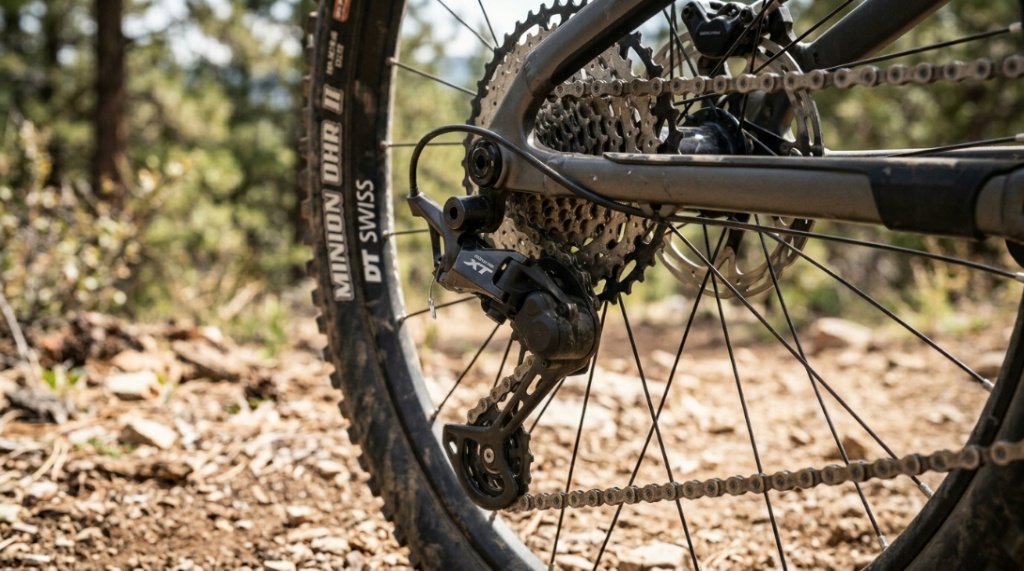
Check for sealed bearings, quality welds, brand-name components, and a solid warranty these four indicators separate durable budget bikes from disposable ones.
Sealed bearings in hubs, bottom brackets, and headsets resist dirt and moisture, dramatically extending service life. Inspect frame welds if possible—they should be smooth and consistent, not lumpy or uneven. Brand-name components, even at entry level, undergo quality testing that generic parts skip. Finally, a manufacturer’s warranty of at least one year on the frame signals confidence in their product. Bikes from unknown brands with no warranty information should be approached with caution.
Red Flags to Watch For
- Unbranded or no-name components throughout
- Heavy, low-quality suspension forks with no adjustment
- Rim brakes on a bike marketed for trail use
- Single-wall rims instead of double-wall
- No available replacement parts or service documentation
Can You Build a Reliable Mountain Bike for Under $500?
Yes, but it requires accepting trade-offs in component quality and potentially upgrading key parts within the first year of ownership.
At the $400–$500 price point, you can find hardtail mountain bikes from reputable brands like Schwinn, GT, and Dynacraft that handle light to moderate trail riding. These bikes typically come with mechanical disc brakes, basic suspension forks, and entry-level drivetrains. They won’t match the performance of $700+ bikes, but with proper maintenance, they’ll last several seasons. The key is choosing a bike with a quality frame and planning for strategic upgrades—replacing the fork or adding better tires can transform a budget bike’s capability without starting from scratch.
For a detailed example of what to expect in this price range, check out this affordable mountain bike that breaks down real-world performance and durability.
Why Is Proper Maintenance Critical for Budget Mountain Bikes?
Budget bikes use components with tighter tolerances and less corrosion resistance, making regular maintenance the difference between a bike that lasts two years and one that lasts five.
Entry-level drivetrains stretch and wear faster than premium options, so cleaning and lubricating your chain every few rides prevents costly replacements. Brake pads on budget bikes may be softer compounds that wear quicker—checking them monthly ensures consistent stopping power. Suspension forks on affordable bikes benefit from regular air pressure checks and seal cleaning to prevent oil leaks. Budget hubs often use simpler bearing systems that need adjustment as they wear. A basic maintenance routine takes 30 minutes monthly but can double your bike’s lifespan.
Essential Monthly Maintenance Checklist
- Clean and lubricate the chain
- Check tire pressure and inspect for cuts
- Test brake function and inspect pad wear
- Verify all bolts are properly torqued
- Inspect suspension fork for smooth operation
What Are the Most Common Mistakes When Buying an Affordable Mountain Bike?
The biggest mistakes include buying based solely on price, ignoring fit and sizing, overlooking component quality, and skipping test rides.
Price-focused shopping leads to bikes that need immediate repairs or replacements, ultimately costing more than a slightly pricier but better-built option. Fit is everything—a bike that’s too large or small causes discomfort, reduces control, and leads to poor riding habits. Many budget buyers focus on flashy features like full suspension while ignoring that the frame and drivetrain are subpar. Finally, never buy a mountain bike without riding it first, even if just around a parking lot. How a bike feels under you matters more than spec sheets.
Fit Guidelines by Rider Height
| Rider Height | Recommended Frame Size |
|---|---|
| 5’0″–5’4″ | Small (15–16 inches) |
| 5’4″–5’8″ | Medium (17–18 inches) |
| 5’8″–6’0″ | Large (19–20 inches) |
| 6’0″–6’4″ | Extra Large (21–22 inches) |
How Do You Test a Mountain Bike Before Buying?
Test ride on varied terrain if possible, check for smooth shifting through all gears, verify brake responsiveness, and listen for unusual noises from the drivetrain or suspension.
A proper test ride reveals issues that spec sheets hide. Shift through every gear combination—skipping, hesitation, or chain drops indicate poor derailment adjustment or worn components. Apply brakes firmly at moderate speed; they should engage progressively without squealing or grabbing. Lift the front and spin the wheel—it should rotate freely without wobbling or grinding. Do the same for the rear. Rock the bike forward and backward with brakes applied to check for headset play. These simple checks take five minutes but prevent costly surprises.
When Is the Right Time to Upgrade From a Budget Mountain Bike?
Upgrade when you’ve outgrown the bike’s capabilities, when maintenance costs approach the price of a better bike, or when your riding frequency justifies the investment.
Most riders know it’s time to upgrade when they’re consistently riding trails that challenge their bike’s limits—bottoming out the suspension on moderate drops, losing traction on technical climbs, or experiencing brake fade on long descents. Another signal is spending more on annual maintenance than the bike’s current value. If you’re riding multiple times weekly and your skills have progressed beyond green and blue trails, investing in a $1,000+ bike delivers noticeable improvements in confidence and performance. Keep your budget bike as a backup or sell it to offset upgrade costs.
Frequently Asked Questions
What is the best affordable mountain bike brand?
Trek, Giant, Specialized, and Cannondale offer the best balance of quality and value in the affordable range. Their entry-level models use proven frame designs and reliable components that outperform cheaper alternatives.
How long should a budget mountain bike last?
With proper maintenance, a $500–$700 mountain bike should last 3–5 years of regular trail riding. The frame often lasts much longer, while components like chains, brake pads, and tires need periodic replacement.
Is it better to buy a cheap bike and upgrade or save for a better one?
Saving for a better bike is usually more cost-effective. Upgrading individual components often costs more than the price difference between budget and mid-range bikes, and you still have the limitations of a basic frame.
Do I need full suspension for trail riding?
No. Hardtail mountain bikes handle most trail riding scenarios well and are significantly more affordable. Full suspension becomes necessary only for aggressive downhill riding or extremely technical terrain.
What size mountain bike do I need?
Bike size depends on your height and inseam measurement. Most manufacturers provide sizing charts, but test riding is the best way to confirm proper fit. A correctly sized bike feels comfortable and controllable.
Are department store mountain bikes worth buying?
Generally no. Department store bikes often use low-quality components, poor welding, and generic parts that fail quickly and are difficult to service. Spending slightly more on a bike shop or reputable brand delivers dramatically better value.
How much should I budget for mountain bike accessories?
Plan to spend $100–$200 on essential accessories including a helmet, gloves, water bottle or hydration pack, basic repair kit, and cycling shorts. These items significantly improve safety and comfort.
Finding an affordable mountain bike that lasts comes down to informed decisions, not luck. By prioritizing frame quality, reliable components, and proper fit, you can confidently hit the trails without emptying your bank account. Remember that the best bike is one that matches your current skill level and riding goals—not the most expensive option on the shop floor. Start with a solid hardtail in the $500–$700 range, maintain it well, and upgrade strategically as your skills grow. Your future self, cruising down a singletrack with confidence, will thank you for making a smart investment today.



+ There are no comments
Add yours