




You’ve finally decided to ditch the dried boxed pasta and craft fresh, restaurant-quality noodles at home. But as you start shopping, you’re immediately overwhelmed by model numbers, roller widths, and attachment sets. The struggle is real: you want a durable, Italian-made machine that won’t break the bank or your countertop, but you don’t want to overpay for features you’ll never use. The good news? The best Marcato pasta machine for you isn’t necessarily the most expensive one—it’s the one that matches your cooking habits, space, and skill level. This guide breaks down the key differences, hidden trade-offs, and practical tests to help you make a confident choice without the guesswork.
What Makes Marcato Different from Other Pasta Machines?
Marcato is an Italian family-owned company that has been perfecting manual pasta rollers since the 1930s. Unlike electric extruders or cheaper imports, Marcato machines use a cold-drawn aluminum body and hardened steel rollers that provide a consistent, smooth sheet every time. This focus on mechanical simplicity means fewer parts to break, easier cleanup, and a machine that can literally last for decades with minimal maintenance.
The Key Engineering Advantages of Marcato
The most significant difference is the “Master” roller system. Marcato’s rollers are precisely machined to create a non-stick surface without chemical coatings. This is crucial because coated rollers (found on cheaper brands) often peel over time, exposing bare metal that rusts. Furthermore, Marcato’s gears are enclosed in a sealed housing, protecting them from flour dust and dough residue, which prevents the jamming issues common in open-gear designs.
Why “Made in Italy” Matters for Quality Control
Genuine Marcato machines are manufactured in Campodarsego, Italy, not just assembled there. This geographic concentration ensures strict quality control over the aluminum alloy and steel tempering process. When you buy a true Marcato, you’re paying for metallurgy that maintains its smoothness even after rolling thousands of sheets of stiff pasta dough, whereas cheaper alternatives often develop rough spots or wobble after a few months.
Which Marcato Model Is Right for You: Ampia vs. Atlas?
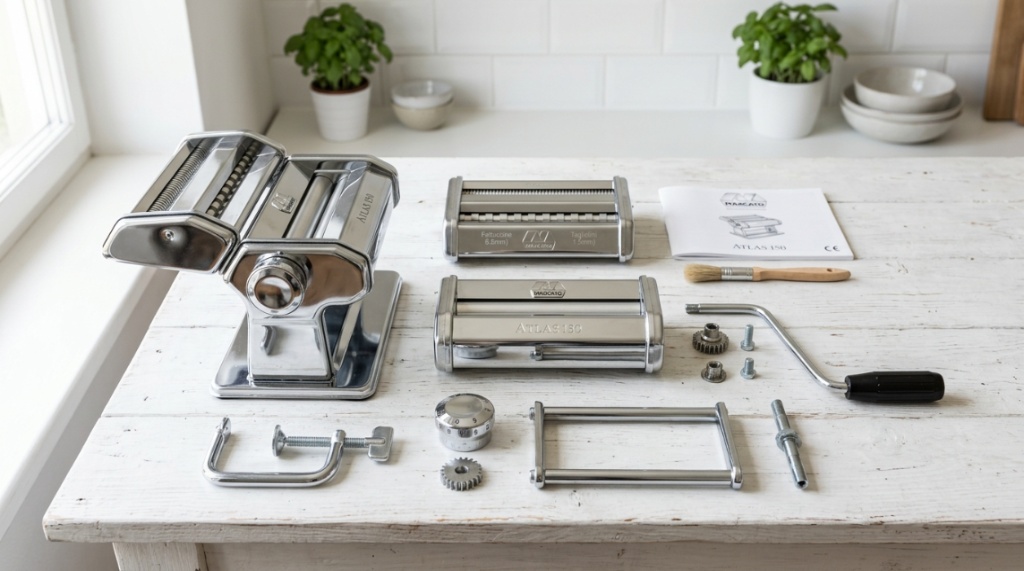
The two main lines you’ll encounter are the Atlas (the classic workhorse) and the Ampia (the wider, larger-format machine). The choice hinges primarily on how much pasta you plan to make at once. If you’re cooking for a family of four or more, or you like making lasagna sheets, the wider Ampia is a game-changer. For singles, couples, or occasional use, the standard Atlas is more than sufficient.
Marcato Atlas 150: The Classic All-Rounder
The Atlas 150 is the gold standard for beginners. Its 150mm (about 6 inches) rollers are perfect for standard fettuccine and tagliatelle. It’s compact enough to store in a drawer, yet heavy enough (over 4 lbs) to stay stable on your counter without clamps. The included cutter for fettuccine is the most versatile size for everyday meals, pairing well with everything from carbonara to pesto.
Marcato Ampia 180: The Professional Choice
If you’ve ever struggled to roll a wide sheet of dough for ravioli, the Ampia’s 180mm (7-inch) rollers are a revelation. This machine requires more counter space and is slightly heavier, but it reduces the number of passes needed to sheet dough for large batches. It’s also the preferred choice for those who frequently make stuffed pastas, as you can roll a sheet wide enough to cut four large ravioli squares at once.
Comparison Table: Atlas vs. Ampia Specifications
| Feature | Atlas 150 | Ampia 180 |
|---|---|---|
| Roller Width | 150 mm (6″) | 180 mm (7″) |
| Best For | 2-4 servings | 4-8 servings |
| Weight | 4.2 lbs | 5.5 lbs |
| Included Cutters | Fettuccine & Tagliatelle | Fettuccine & Tagliatelle |
| Counter Stability | Requires clamp for heavy use | Better stability due to weight |
How Do You Choose the Right Roller Thickness Setting?
Marcato machines have a numbered dial (usually 0 to 9) that controls the gap between rollers. Starting at the thickest setting (0) and gradually decreasing the number (moving to 9) makes the dough thinner. The trick is to never skip more than two numbers at a time, or you’ll tear the dough. For most fresh pasta, you’ll stop between settings 5 and 7, depending on the recipe.
The Folding Technique for Perfect Elasticity
To achieve restaurant-quality texture, you must use the “lamination” method. After rolling the dough at setting 3, fold it in thirds, turn it 90 degrees, and run it through again at the same setting. This cross-rolling aligns the gluten strands, making the pasta chewy and less likely to break during cooking. Repeat this fold-and-roll process 3-4 times before thinning further.
Why You Should Never Force the Crank
If the handle becomes hard to turn, it means your dough is too dry or you’re trying to thin it too fast. Forcing the crank can strip the internal gears. Instead, sprinkle a little water on the dough sheet and knead it slightly before resuming. A smooth crank is the best indicator that your dough hydration is optimal (around 45-50% water to flour).
Can You Use Electric Attachments with a Manual Marcato?
Yes, and this is where Marcato truly shines. You can purchase a separate motor attachment that connects to the side of the Atlas or Ampia, converting it to an electric machine in seconds. This is a brilliant long-term investment because you get the precision of a manual machine but can opt for hands-free operation when making large batches.
Evaluating the Marcato Motor Attachment
The motor attachment is surprisingly quiet and powerful, but it has a safety clutch that slips if the dough is too tough, preventing damage to the gears. However, you must still guide the dough with one hand and cut it with the other. It’s not fully automatic—it just eliminates the elbow grease. This is a better choice than a standalone electric extruder because it takes up less storage space and is easier to clean.
Which Additional Cutters Are Worth Buying?
Beyond the standard fettuccine and tagliatelle, Marcato offers a ravioli cutter, a lasagnette cutter, and a spaghetti cutter. In my testing, the spaghetti attachment is the least useful because the round noodles tend to stick together if not floured generously. The lasagnette cutter, which produces a wavy edge, adds a beautiful presentation with minimal extra effort and is a better upgrade than the spaghetti die.
Is the Marcato Pasta Machine Easy to Clean and Maintain?
Cleaning is straightforward but requires a specific no-water rule. Never submerge the machine or wash it with soapy water, as this will wash away the lubricating oils and potentially rust the gears. Instead, use a dry pastry brush or a stiff nylon brush to remove flour and dough residue after each use.
Once you finish cooking up a mess of fresh homemade noodles, keeping your cooking space clean and odor-free is essential—something you can read more about in our guide on why stainless steel island range hoods are ideal for long-term kitchen use.
Step-by-Step Cleaning and Storage Routine
- After making pasta, let the machine air-dry for 15 minutes to let any clinging dough harden.
- Use a dry brush to sweep off all flour and dough fragments from the rollers and cutters.
- Wipe the exterior with a dry microfiber cloth (never wet).
- If you live in a humid climate, run a piece of wax paper through the rollers on setting 0 to leave a thin protective coating.
- Store in a cool, dry place. Do not fold the clamp lever over the machine when storing, as this can bend the frame.
Why a Simple Design is Easier to Maintain than a Complex Extruder
Manual extruders (which push dough through dies) have many crevices where dough can hide and harden. Marcato’s roller design is open and flat, which means less hidden residue. This is a major reason why many professional pasta chefs prefer the roller method for everyday use—it’s far more hygienic and faster to clean than a plastic extruder which often needs to be partially disassembled and dried out completely.
What Accessories Are Essential vs. Gimmicky?
When buying your first Marcato, it’s tempting to buy the full “pasta set” with multiple cutters. However, you’ll rarely use more than two cutters. Focus on the core machine and add accessories only when you identify a specific need. A bench scraper and a rolling pin are more useful than a third cutter attachment.
Essential Accessories for Your Setup
- Bench Scraper: vital for dividing dough and cleaning work surfaces.
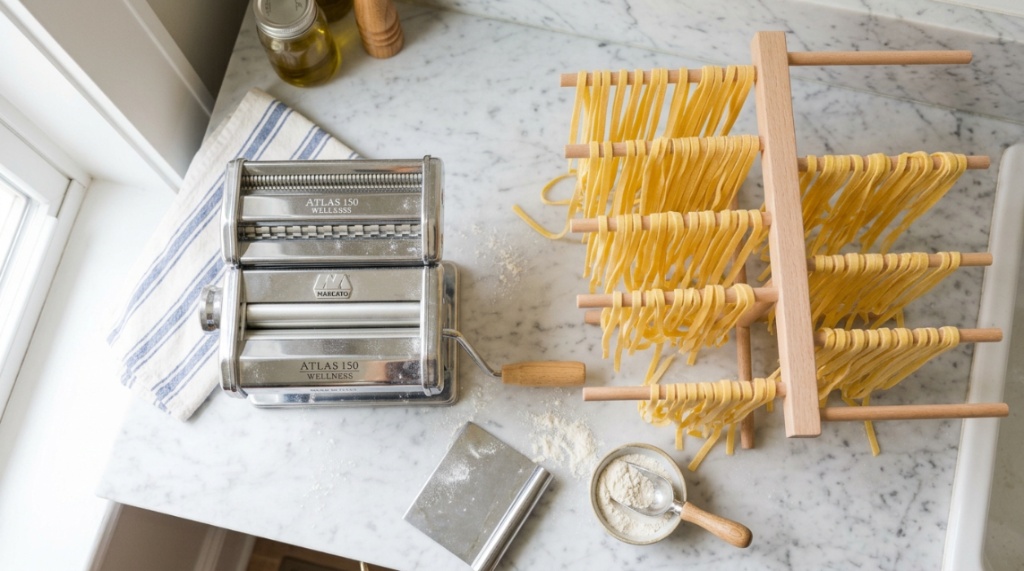
- Pasta Drying Rack: helps prevent fresh pasta from sticking before cooking.
- Pastry Brush: for cleaning the machine and dusting dough.
- Digital Scale: essential for consistent dough hydration.
Why You Should Skip the “Ravioli Tray” Attachment
Marcato’s ravioli tray seems like a great idea—you roll a sheet over the tray, press to fill, and roll a sheet over the top. In practice, it’s frustrating to get the water sealing just right without tearing the dough. A simple round cutter and a fork to crimp the edges give you more control and allow for bigger, more filling-stuffed ravioli.
How Much Should You Pay for a Quality Marcato Machine?
The price of the best Marcato pasta machine varies significantly based on the model and included accessories. A basic Atlas 150 with standard cutters typically retails between $70 and $100. The Ampia 180 is usually $50 to $70 more. You should avoid anything below $60, as it’s likely a copycat or a lower-quality plastic-gear version.
Budgeting for the Motor Attachment
If you plan to eventually buy the motor, consider the price of the base machine + motor (which is around $150). The combined cost is still less than many high-end electric extruders, but it gives you more flexibility. If you buy the motor separately later, you won’t be paying a premium, as the pricing is consistent across retailers.
Where to Find Deals and Discounts
Rather than paying full price, I recommend looking at specialty kitchen supply stores or checking for open-box deals on reputable marketplaces. A physically damaged box but unused machine can save you 20-30%. When hunting for discounts, always compare the price per gram of weight—the heavier machines use more aluminum and are typically higher quality. For a useful breakdown of budget-friendly picks in your region, check out this guide on the best Marcato pasta machine options available today.
Why Manual Beats Electric for Most Home Cooks?
While electric pasta makers like the Philips are convenient, they are bulky and often push out gummy pasta because they mix and extrude in one step. A manual Marcato gives you total control over the dough’s texture. You can feel when the dough is too dry or too wet, something a machine cannot do for you.
The Learning Curve: Finding the Rhythm
There is a satisfying ritual to hand-cranking pasta. It takes about 10 minutes to roll and cut dough for two people, which is only slightly longer than setting up an electric extruder. Moreover, you don’t have to scrub a plastic hopper and die afterward. The manual process is quieter and more meditative—it cooks you up to slow down and enjoy the craft.
Counter Space and Portability Benefits
Most electric pasta machines are the size of a stand mixer and require permanent counter placement. In contrast, a manual Marcato is small enough to fit in a drawer or a cabinet. It’s also portable—you can take it to a vacation rental to cook with friends, which is an impossible hassle with a corded electric unit.
Can You Make Gluten-Free Pasta with a Marcato Machine?
Yes, and this is a major selling point. Gluten-free doughs (made with rice flour, tapioca, or chickpea flour) are notoriously crumbly and frustrating with electric extruders. Because the Marcato applies direct, even pressure through rollers, it can press these fragile doughs into sheets that hold together much better.
Adjusting Your Technique for Alternative Flours
When rolling gluten-free dough, skip the folding lamination step—it will cause cracking. Instead, roll it once at a medium thickness (setting 5) and then every subsequent pass should reduce by only one number. You must also use a lot of potato starch or rice flour for dusting to prevent sticking, as these doughs are stickier than wheat pasta.
Why Rollers are Superior to Extruders for Non-Traditional Doughs
Extruders soften the gluten-free dough and can clog if it’s even slightly wet. The Marcato’s rollers allow you to gently shape the dough without overheating it or causing the starches to gelatinize prematurely. This results in a better texture, closer to wheat pasta, and significantly less frustration during cooking—your noodles will hold their shape without turning to mush.
What Safety and Stability Features Should You Check?
Marcato machines come with a clamp that secures the base to your countertop’s edge. While the weight of the machine helps somewhat, this clamp is critical for safe operation. If you’re using the machine without clamping, the machine can walk off the counter as you crank.
How to Properly Secure Your Machine
Open the clamp lever and slide it under the counter, tightening until snug. For marble or thick butcher-block counters, the clamp may not extend far enough to grip securely. In this case, place a thin cutting board under the machine to provide a flat surface and extra grip. Never use the machine unclamped with stiff dough, as the rocking motion can damage the inner gears.
The Dough Stopper: A Small Feature with Big Benefits
Newer Marcato models include a plastic “dough stopper” that rests against the dough to smooth out any wrinkles before it enters the rollers. This ensures a perfectly flat sheet, which is especially helpful when you’re rolling out scraps. Check that your machine includes this part; it’s a minor convenience but prevents aerated, bubbly dough.
Which Attachments Should You Skip and What Should You Prioritize?
Marcato sells unique attachments like a tortellini maker and a gnocchi board. While fun, these often perform worse than simpler manual methods. For instance, the tortellini maker is notorious for tearing the dough where it folds. Prioritize the motor and a good set of cutters over these novelty items.
Prioritizing the “Crimper” vs. the “Cutter”
When you use the tagliatelle cutter, you produce two different widths—one smooth side and one crimped side. The crimped side is excellent for holding onto rustic sauces like ragù. If you can only afford one cutter, choose the one with the wavy edge (crimped) because it is more versatile; you can always cut strips with a knife if you need flat noodles.
Why the “Pasta Scoop” is a Waste of Money
You will see a plastic basket-like scoop that claims to catch the pasta as it comes out of the cutter. In practice, it gets in the way of your hands, and the pasta often falls back into it, tangling. You’re better off catching the noodles with your hands and gently tossing them with flour.
How Do You Store Your Marcato for Longevity?
Storing your Marcato correctly is the single most important factor in preventing rust, especially if you live near the coast or in a humid area. The key is to keep it completely dry and allow air to circulate.
The Rust Prevention Protocol
After cleaning, leave the machine out on the counter for an hour to fully air dry before putting it away. Do not store it in a plastic bag—this traps moisture. If you need to store it in a cabinet, place a small silica gel packet inside the drawer next to the machine to absorb ambient humidity.
Rejuvenating an Old Machine
If you inherit an old Marcato that has developed stiffness, you can revitalize it by applying a food-grade mineral oil (not cooking oil) to the side gears. Apply a drop to the gear shaft and turn the handle for a minute to distribute it. This will prevent rust and make the crank smooth again. Avoid using olive oil, which can gum up and turn sticky over time.
Frequently Asked Questions
Can I use the Marcato machine to make lasagna sheets?
Absolutely. Roll the dough to thickness setting 6 or 7, then cut the long sheet into 10–12 inch lengths. The Ampia model is best for lasagna because its wider rollers make the sheets wide enough to cover the bottom of a standard baking dish without seams.
What is the best way to dry pasta made with a Marcato?
Hang the noodles on a drying rack or lay them in a single layer on a floured baking sheet. Let them dry for at least 30 minutes before cooking. For longer storage, let them dry completely for 24 hours until brittle, then store in an airtight container for up to a month.
Can I roll ravioli dough thin enough?
Yes, the Marcato can roll down to setting 9, which is very thin, almost translucent. For ravioli, setting 7 is usually ideal—thin enough to cook quickly but strong enough to hold a filling without tearing.
Is the Marcato machine dishwasher safe?
No, never put any part of the Marcato in the dishwasher. The high heat and water will destroy the aluminum body and steel cutters. Always clean with a dry brush and a cloth.
How do I know my Marcato machine is authentic?
Check for the “Made in Italy” stamp on the base and the serial number. The box should have holographic sticker for authenticity. Counterfeit Marcato machines often have a slightly lighter weight and a missing dough stopper. Always buy from an authorized dealer.
Can I make colored pasta with spinach or squid ink?
Yes, the rollers handle colored dough perfectly. For spinach, blanch and puree the leaves, then squeeze out excess water before adding to the flour. The strong metal rollers will evenly distribute the color without clogging.
What if my crank becomes hard to turn?
This usually indicates the dough is too dry. Remove the dough, wrap it in a damp cloth for 10 minutes, then knead it again. If the crank is still hard, check for dough stuck in the gears and brush it out before proceeding.
Conclusion: Your Perfect Pasta Machine Awaits
Choosing the best Marcato pasta machine doesn’t have to be a complicated decision. Start by determining whether you need the wider Ampia for big families or the compact Atlas for daily dinners. Remember that all Marcato models share the same robust aluminum construction and lifetime-proof gears, so the base machine will serve you well for years. Focus your budget on buying the correct width and investing in a decent motor attachment later, rather than filling your drawer with gimmicky cutters. Now that you know the differences between the models, the thickness settings, and the maintenance requirements, you’re ready to roll up your sleeves and make the fluffy, delicious pasta you’ve been craving. Take the plunge, purchase your machine, and enjoy the satisfaction of pulling a beautiful sheet of fresh dough through the rollers tonight.






+ There are no comments
Add yours