





What Is a Skateboard Safety Checklist and Why Does It Matter?
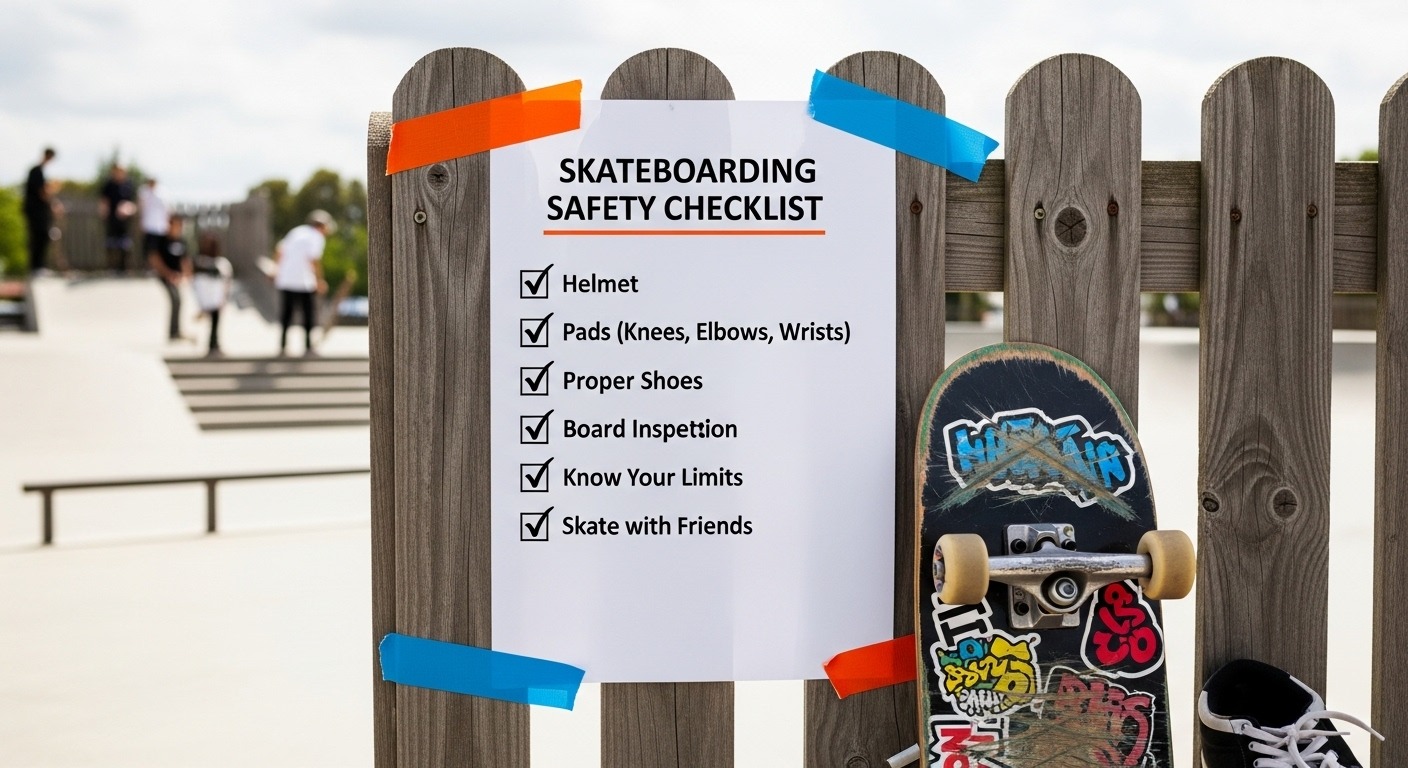
A skateboard safety checklist is a simple, repeatable list that helps riders reduce injury risk before, during, and after skating. It covers protective gear, board condition, environment checks, and rider readiness. The goal is not to skate cautiously—it is to skate consistently without avoidable injuries.
Skateboarding injuries are common and measurable. According to emergency room data from multiple injury surveillance studies, falls account for over 70% of skateboard-related injuries, with head, wrist, and ankle injuries ranking highest. Most of these injuries happen during routine sessions, not high-risk stunts. That is the real problem. Riders often skip basic safety steps because they feel unnecessary.
This guide shows you how to build a skateboard safety checklist that works in real life. Not a generic list. A practical system you can reuse every session. You will also get a clear skate gear list, environment checks, and habit-based tips backed by real injury patterns.
If you skate regularly, this checklist saves time, money, and recovery weeks. Let’s build it step by step.
What Should Be the First Item on a Skateboard Safety Checklist?
Short answer: Personal protective gear should always be the first checkpoint.
Protective gear reduces both injury severity and downtime. Data from skate park injury reports shows that riders wearing helmets are significantly less likely to suffer head trauma that requires hospital admission. Wrist guards also reduce fracture risk during forward falls.
Essential Protective Gear Checklist
- Helmet (certified for skate or multi-impact use)
- Wrist guards
- Knee pads
- Elbow pads
- Skate shoes with flat, grippy soles
Case insight: A community skate park in California tracked injuries over 12 months. Riders without helmets accounted for over half of head-related ER visits, despite being a smaller portion of total skaters.
This is why your skate gear list must be non-negotiable. Gear comes first. Tricks come later.
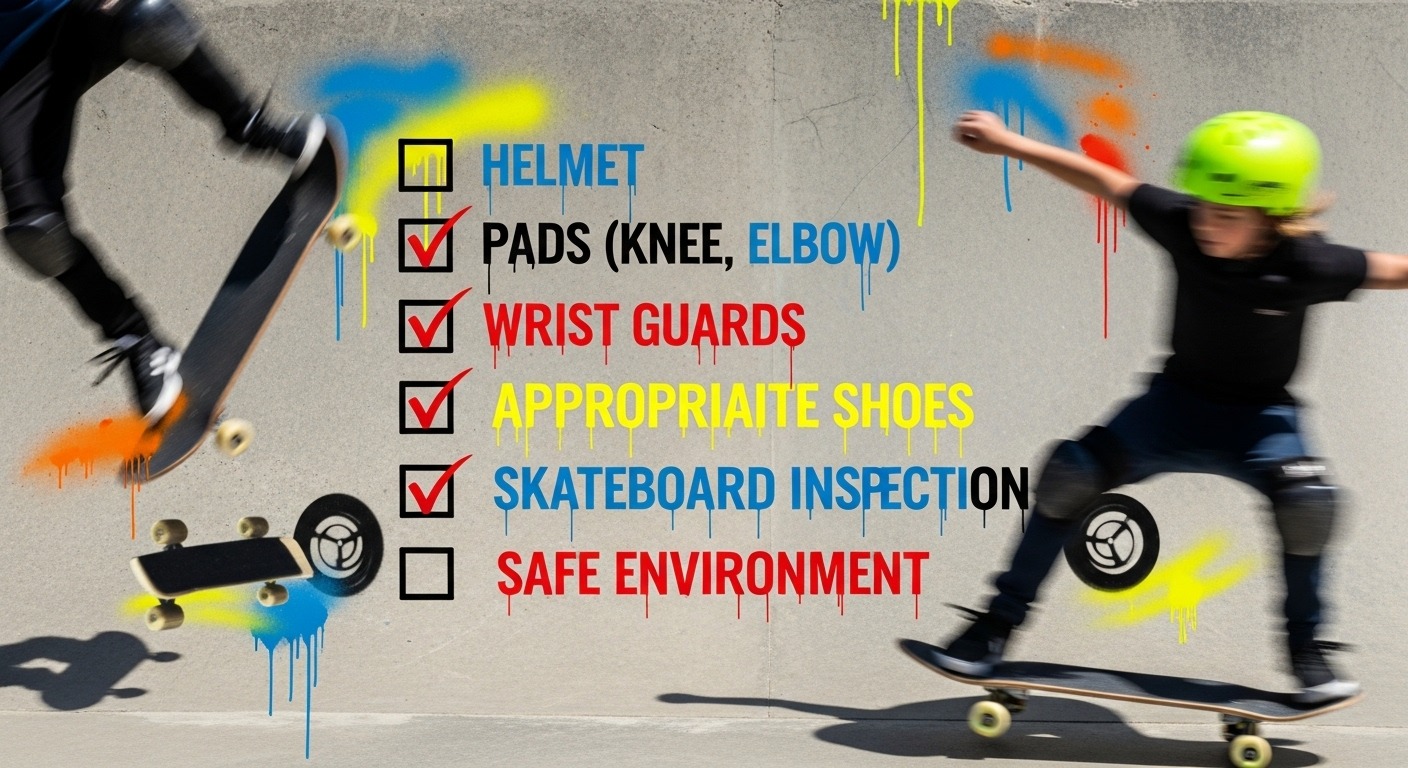
How Do You Check Your Skateboard Before Riding?
Short answer: Inspect deck, trucks, wheels, and bearings before every session.
Board failure causes sudden loss of control. Small cracks or loose hardware are enough to cause serious falls.
Board Condition Safety Checklist
- Check deck for cracks, chips, or pressure fractures
- Ensure trucks are tight and aligned
- Spin wheels to confirm smooth rotation
- Check bearings for dirt or grinding sounds
- Confirm grip tape is intact and not peeling
Case insight: In a review of beginner injuries, over 30% involved equipment issues such as loose trucks or worn grip tape. These were preventable.
Make this step automatic. It takes under two minutes.
Why Is the Right Helmet Critical for Skateboarding Safety?
Short answer: Skateboarding requires multi-impact helmets, not bike-only helmets.
Skate falls are different. You fall backward, sideways, and repeatedly. Standard bike helmets are designed for single impacts. Skate-certified helmets handle multiple hits.
Helmet Selection Checklist
- Multi-impact certification
- Proper fit with no movement
- Chin strap secured snugly
- No visible cracks or dents
Replacing a helmet after visible damage is not optional. Foam compression reduces protection even if the shell looks fine.
How Do Wrist Guards and Pads Reduce Common Skate Injuries?
Short answer: They distribute impact force and prevent joint hyperextension.
When skaters fall, instinct takes over. Hands go out first. Wrist guards absorb impact and keep joints aligned.
Pad Safety Checklist
- Snug fit without cutting circulation
- Hard caps properly centered
- No cracked plastic or torn straps
- Full range of motion confirmed
Studies on youth skate injuries show wrist fractures drop significantly when guards are worn consistently.
How Does Environment Affect Skateboard Safety?
Short answer: Surface, traffic, and weather directly impact injury risk.
Many accidents happen because riders ignore surroundings. A perfect board means nothing on unsafe terrain.
Environment Safety Checklist
- Dry surface with no loose gravel
- Clear visibility and lighting
- No vehicle traffic nearby
- Pedestrian awareness
- Weather checked before riding
Wet concrete reduces wheel traction. Even light moisture increases slip risk.
Should Warm-Ups Be Part of a Skateboard Safety Checklist?
Short answer: Yes. Warm-ups reduce muscle strain and balance errors.
Cold muscles react slower. That delay causes missteps.
Warm-Up Checklist
- 5 minutes of light movement
- Ankle rotations
- Hip mobility drills
- Wrist and shoulder rolls
A small warm-up lowers early-session falls, especially for street skaters.
How Do Skill Level and Trick Selection Affect Safety?
Short answer: Attempting tricks beyond current skill increases injury risk.
Progression matters. Many injuries happen when riders skip steps.
Skill-Based Safety Checklist
- Practice new tricks on flat ground first
- Use protective gear when learning
- Stop after repeated failed attempts
- Rest when fatigued
Fatigue reduces reaction time. That leads to sloppy landings.
What Should Parents Include in a Youth Skateboard Safety Checklist?
Short answer: Supervision, correct gear size, and park rules.
Youth-Specific Checklist
- Helmet always worn
- Gear sized correctly
- Adult supervision at parks
- Clear park etiquette rules
Children are more likely to sustain wrist and elbow injuries due to lower fall control.
How Often Should You Review Your Skateboard Safety Checklist?
Short answer: Before every session and after any fall.
Checklists only work when used. Review it mentally or physically before stepping on the board.
What Is a Sample Skateboard Safety Checklist?
| Category | Checklist Item |
|---|---|
| Gear | Helmet, pads, wrist guards |
| Board | Deck, trucks, wheels, bearings |
| Environment | Dry surface, no traffic |
| Body | Warm-up, hydration |
How Can a Skateboard Safety Checklist Improve Long-Term Progress?
A skateboard safety checklist is not about fear. It is about consistency. Riders who stay injury-free skate more often, progress faster, and spend less time recovering.
Real-world injury data shows most skateboard injuries are preventable. Loose trucks. Missing helmets. Wet surfaces. These are habits, not accidents.
By using a simple skate gear list and pre-ride checklist, you remove guesswork. You skate with confidence. You reduce downtime. You stay on the board longer.
Call to Action: Save this checklist. Print it. Share it with your skate crew. Use it before your next session and turn safety into a habit, not a reminder.
Frequently Asked Questions About Skateboard Safety Checklists
Do experienced skaters really need a safety checklist?
Yes. Experience reduces mistakes but does not eliminate equipment failure or environmental risks.
Is a helmet mandatory for street skating?
Legally it depends on location, but injury data strongly supports helmet use in all skate environments.
How often should I replace my skateboard helmet?
Replace it after any significant impact or visible damage.
Are wrist guards necessary for adults?
Yes. Wrist fractures are common across all age groups.
Can I skate safely without pads?
You can skate, but injury severity increases without pads.
Does weather really affect skateboard safety?
Yes. Moisture reduces traction and control.
What is the most overlooked item in a skate safety checklist?
Checking truck tightness and surface conditions.
Related Topics: Five Things You May Not Know About Anodising
What Next: Four Common Qualitative Data Collection Methods




+ There are no comments
Add yours