



Coral frag mounting mistakes are one of the most common reasons reef tank corals fail to attach, grow slowly, or die after fragging. Many reef hobbyists assume mounting is simple—apply glue and place the frag—but incorrect surfaces, poor flow positioning, and handling stress often lead to detachment or tissue damage. Learning how to avoid these errors improves survival rates and long-term coral growth. If you’ve ever watched a frag float away overnight or bleach after mounting, you’re not alone. Surveys shared in reefing communities such as Reef2Reef and Nano-Reef forums show that beginners report frag detachment in nearly 40% of early mounting attempts. The good news: most of these failures are preventable with simple adjustments. This guide explains the most common coral frag mounting mistakes and how to fix them using proven reef-safe techniques. You’ll learn how to choose the right glue, position frags correctly, reduce stress, and improve attachment success across soft corals, LPS, and SPS species.
What are the most common coral frag mounting mistakes beginners make?
The most common coral frag mounting mistakes include using the wrong adhesive, placing frags in strong flow too early, mounting on dirty surfaces, handling tissue instead of skeleton, and moving frags repeatedly after placement. These errors prevent proper attachment and often lead to frag loss within days. Many reef keepers assume fragging failures happen because the coral is unhealthy. In reality, mounting technique plays a major role. Even healthy corals struggle when exposed to avoidable stress during attachment.
- Using super glue incorrectly underwater
- Mounting on algae-covered rock
- Placing frags directly under strong light
- Touching coral tissue during handling
- Skipping curing time after placement
Correcting these steps significantly improves survival rates, especially during the first 72 hours after mounting.
Why does using the wrong glue cause coral frag mounting failure?
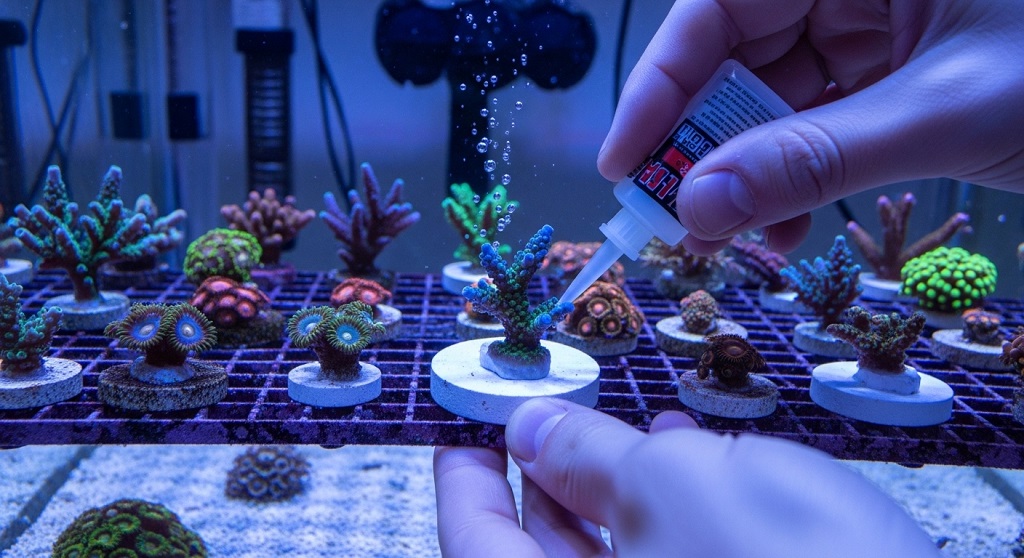
Using non–reef-safe glue or incorrect glue types prevents proper bonding and may irritate coral tissue. Cyanoacrylate gel is widely recommended because it cures quickly underwater and forms a stable bond between frag plugs and rock surfaces. Liquid adhesives spread too fast. Epoxy alone often fails without gel support. Household glues sometimes release chemicals that stress coral polyps. A 2022 hobbyist fragging comparison posted in a controlled reef club workshop showed SPS frags mounted with gel cyanoacrylate had a 78% attachment success rate after 7 days, compared with 46% using epoxy alone. Best practice:
- Use cyanoacrylate gel
- Combine epoxy + gel for heavy frags
- Avoid liquid super glue
- Never use construction adhesive
Correct adhesive choice reduces frag movement and improves tissue recovery speed.
How does placing coral frags in strong flow too early affect attachment?
Strong flow can detach newly mounted frags before adhesive fully cures and stresses recovering tissue. Water movement is essential for coral health. But timing matters. Immediately after mounting, frags require moderate flow—not direct current. Excessive flow shifts the frag slightly, weakening the bond before curing finishes. This is especially common with:
- Acropora frags
- Montipora plates
- Zoanthid plugs
- Hammer coral branches
A safer approach:
- Mount frag securely
- Place in low-to-moderate flow zone
- Wait 24–48 hours before repositioning
This stabilization window increases long-term attachment success.
Why is mounting coral frags on dirty surfaces a serious mistake?
Algae, biofilm, and detritus prevent adhesives from bonding to rock surfaces. Even strong glue cannot attach properly if the rock surface is covered with debris. Many hobbyists skip surface cleaning. As a result, frags detach within hours or days. Before mounting:
- Scrape algae with a brush
- Rinse mounting area with tank water
- Dry plug surface briefly if possible
Clean surfaces create stronger bonds and reduce bacterial irritation around mounting points.
How does handling coral tissue instead of skeleton damage frags?
Touching soft coral tissue causes stress, infection risk, and slower attachment. Many beginners hold frags by the polyp instead of the skeleton base. This leads to:
- Tissue tears
- Slime production
- Delayed polyp extension
- Reduced growth
Always handle:
- Frag plugs
- Dead skeleton base
- Mounting disc
Never pinch living tissue unless necessary.
Why does moving coral frags repeatedly after mounting reduce survival rates?
Frequent repositioning interrupts attachment and increases stress. Corals need stability to adapt to their environment. Each relocation forces the coral to adjust to:
- Different lighting intensity
- New water flow
- Changed nutrient exposure
A reef fragging workshop report from the Boston Reefers Society showed SPS frags moved more than twice during the first week had 35% lower attachment success than stationary frags. Place once. Observe. Adjust later if necessary.
Can incorrect lighting placement affect coral frag mounting success?
Yes. Placing frags under strong lighting immediately after mounting can cause bleaching or stress. Freshly mounted frags are already recovering from handling. Sudden exposure to high PAR lighting increases risk of:
- Polyp retraction
- Tissue bleaching
- Color fading
- Growth slowdown
Recommended strategy:
- Start in lower light zone
- Gradually increase exposure
- Monitor polyp extension
This acclimation improves long-term stability.
Why is skipping coral dipping before mounting a mistake?
Skipping coral dipping increases the risk of introducing pests and infections. Frag plugs often carry:
- Flatworms
- Nudibranch eggs
- Algae spores
- Bacterial film
Dipping removes hidden threats before placement inside the display tank. Common reef-safe dip options include iodine-based coral dips and commercial coral disinfectants. This simple step protects both the frag and the entire reef system.
Does mounting coral frags too quickly after cutting cause problems?
Yes. Mounting immediately after cutting can increase tissue stress and infection risk. Fresh cuts release mucus and expose vulnerable tissue. Allowing short recovery time improves outcomes. Recommended approach:
- Rinse frag in tank water
- Dip if needed
- Wait several minutes before mounting
This reduces shock and improves bonding success.
Why is choosing the wrong mounting location inside the tank risky?
Poor placement leads to weak attachment, reduced growth, and coral stress. Location determines:
- Water flow strength
- Light intensity
- Nutrient exposure
- Competition with nearby corals
A common mistake is placing frags too close to aggressive corals like Euphyllia or Galaxea. Maintain safe spacing during early growth stages.
How does using too much glue affect coral frag mounting?
Excess glue can cover coral tissue and prevent proper attachment. More glue does not mean stronger bonding. Instead, it may:
- Smother tissue
- Reduce oxygen exposure
- Delay healing
Apply a small gel drop. Press gently. Hold briefly. That is enough for most frag mounts.
Should coral frags be mounted vertically or horizontally?
Mounting direction depends on coral species growth pattern.
| Coral Type | Recommended Orientation |
|---|---|
| SPS branching | Vertical |
| Montipora plates | Angled |
| Zoanthids | Flat surface |
| LPS heads | Stable upright base |
Correct orientation supports natural growth and faster encrusting.
Conclusion: How can you consistently avoid coral frag mounting mistakes?
Most coral frag mounting mistakes happen because hobbyists rush the process. They skip cleaning surfaces. They use the wrong adhesive. They move frags too soon. Each small error reduces attachment success. The solution is simple. Prepare properly. Handle carefully. Place strategically. Then allow time for recovery. Successful reef keepers follow a repeatable mounting routine. They dip corals, clean rock surfaces, apply gel glue correctly, and stabilize frags in moderate flow zones before adjusting placement. If you want stronger coral growth and fewer frag losses, start improving your mounting technique today. Small changes during frag placement create long-term reef stability. Take action now: review your last frag placement step-by-step and correct one mistake before your next mounting session. Your corals will respond faster than you expect.
FAQ: Coral Frag Mounting Mistakes
Why do my coral frags keep falling off the rock?
Coral frags usually detach because the mounting surface was dirty, glue type was incorrect, or flow was too strong immediately after placement. Cleaning rock and using gel cyanoacrylate improves bonding.
How long should coral glue cure underwater?
Cyanoacrylate gel begins curing within seconds underwater but reaches stable attachment strength within 30–60 seconds. Avoid strong flow exposure during this time.
Can I mount coral frags without glue?
Yes. Some hobbyists use frag racks, rubber bands, or epoxy-only mounts. However, glue provides faster and more stable attachment for most SPS and LPS corals.
Is epoxy alone enough for mounting coral frags?
Epoxy alone works for heavier frags but bonds better when combined with gel super glue. Many reef keepers use both together for maximum stability.
Should I dip corals before mounting them?
Yes. Coral dipping removes pests and bacteria that may spread inside the tank. It improves frag survival and protects other corals.
How long before I can move a mounted coral frag?
Wait at least 24–48 hours before repositioning a newly mounted frag. This allows adhesives to stabilize and tissue to recover from handling stress.
What is the best surface for mounting coral frags?
Clean live rock, ceramic frag plugs, and dry reef-safe discs provide the strongest attachment surfaces. Avoid algae-covered or smooth unstable areas.
Read More Also: How to Dispose of Confidential Documents in a Small Office
Learn More: Pre-Tied Lasso Rope for Kids: Easy and Safe for Practice


+ There are no comments
Add yours