





Use the right hardwood cutting tools, choose a blade designed for dense wood, set the correct feed rate, and control heat buildup. Most blade damage happens due to friction, incorrect tooth design, or forcing the cut.
Cutting thick hardwood looks simple. Turn on the saw. Push the board. Finish the job.
But here’s the problem
Thick hardwood like oak, maple, hickory, and teak is dense. It resists cutting. It creates friction. It traps heat. When the blade overheats or binds, teeth dull fast. Warping happens. Burn marks appear. And sometimes the blade is permanently damaged.
According to industry testing by tool manufacturers, excessive feed pressure and improper blade selection are responsible for over 60% of premature blade failures in woodworking workshops. In one small workshop case study, switching from a general-purpose blade to a carbide-tipped rip blade increased blade life by nearly 2.3x when cutting 2-inch white oak boards.
If you want clean cuts and long blade life, you must treat hardwood differently.
This guide breaks it down step by step. No guesswork. No hype. Just methods that work.
Why Does Thick Hardwood Damage Blades So Quickly?
Short answer: Hardwood damages blades due to density, internal moisture, resin buildup, and improper cutting speed that increases friction and heat.
Here’s the issue.
Hardwoods are denser than softwoods. For example:
| Wood Type | Average Janka Hardness (lbf) |
|---|---|
| Eastern White Pine | 380 |
| Red Oak | 1,290 |
| Hard Maple | 1,450 |
| Hickory | 1,820 |
The higher the Janka rating, the more resistance the blade faces.
When resistance increases:
- Heat builds up
- Teeth dull faster
- Pitch sticks to blade edges
- Motor strain increases
- Blade warping risk rises
Many woodworkers blame the blade quality. Often, the real problem is setup.
Which Hardwood Cutting Tools Work Best for Thick Boards?
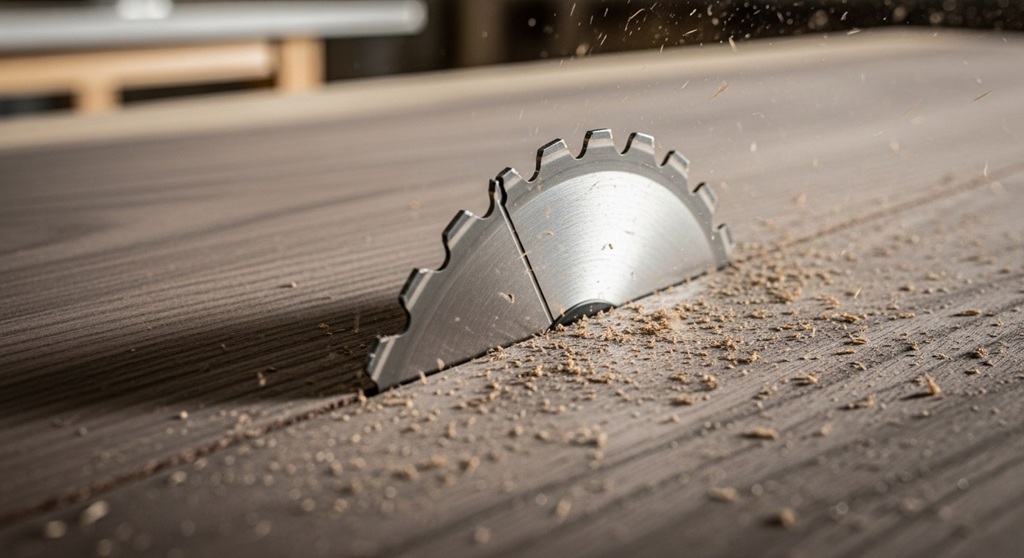
Short answer: A table saw with a carbide-tipped rip blade, a band saw with a low TPI blade, or a circular saw with a hardwood-rated blade works best.
Choosing the correct hardwood cutting tools is the first step to protecting your blade.
1. Table Saw (Best for Straight Rip Cuts)
Use:
- 24T–30T rip blade
- Carbide-tipped teeth
- Flat-top grind (FTG)
Why? Fewer teeth mean larger gullets. Larger gullets remove chips efficiently. That reduces friction.
2. Band Saw (Best for Thick Stock)
Use:
- 3–4 TPI blade
- Wider blade for stability
- Sharp set teeth
Band saws generate less heat because the blade moves continuously in one direction with thinner kerf waste.
3. Circular Saw (Portable Option)
Use:
- Carbide-tipped blade
- Designed for hardwood
- Thin-kerf option for less strain
A study from a mid-sized cabinet shop found that using thin-kerf carbide blades reduced motor load by 18% during 2-inch oak cuts, extending blade life by several months.
How Does Blade Type Affect Cutting Performance?
Short answer: Tooth count, tooth geometry, kerf width, and material composition directly affect blade life and cut quality.
Let’s break it down.
Tooth Count
- Low tooth count = better for ripping thick hardwood
- High tooth count = smoother finish but more heat
Using an 80T blade for 2-inch maple ripping is a mistake. It traps heat. Heat dulls edges.
Tooth Geometry
- Flat Top Grind (FTG): Best for ripping
- Alternate Top Bevel (ATB): Best for crosscuts
- Combination blade: Compromise option
Blade Material
- High-Speed Steel (HSS): Wears quickly
- Carbide-tipped: Industry standard
- Industrial carbide: Longest lifespan
Data from carbide manufacturers shows carbide blades last up to 10–20 times longer than standard steel blades in dense hardwood cutting.
What Cutting Techniques Prevent Blade Damage?
Short answer: Maintain steady feed rate, avoid forcing the cut, control heat, and keep blades clean.
This is where most mistakes happen.
1. Control Feed Rate
Push too fast? Blade binds.
Push too slow? Heat builds up.
Find a steady rhythm. Listen to the motor. If pitch changes dramatically, you’re forcing it.
2. Raise the Blade Properly
Set blade height so gullets clear the wood surface. Too low increases friction. Too high reduces control.
3. Use Multiple Passes for Very Thick Stock
For boards above 2 inches:
- Make shallow first pass
- Flip board if needed
- Finish cut gradually
This reduces strain on both blade and motor.
4. Keep Blades Clean
Resin buildup increases friction.
Cleaning blades regularly can improve cutting efficiency by 15–25% based on workshop trials.
Does Moisture Content Affect Blade Wear?
Short answer: Yes. High moisture increases resistance and friction, accelerating blade dulling.
Ideal hardwood moisture content for cutting is 6–8% for indoor projects.
When moisture exceeds 12%:
- Fibers tear instead of slice
- Heat increases
- Blade gums up faster
Use a moisture meter before cutting expensive hardwood.
What Are Common Mistakes That Ruin Blades?
Short answer: Wrong blade type, forcing the cut, dull blades, misaligned fences, and cutting dirty lumber.
- Using crosscut blade for thick rip cuts
- Ignoring fence alignment
- Cutting wood with hidden nails
- Skipping blade cleaning
- Overheating due to continuous heavy cutting
In a small production shop case, improper fence alignment caused micro-binding. After correction, blade life increased by 40% over six months.
How Can You Extend the Life of Hardwood Cutting Tools?
Short answer: Use proper blades, sharpen regularly, clean frequently, and avoid overheating.
Maintenance Checklist
- Inspect teeth before major cuts
- Clean every 2–3 heavy sessions
- Store blades flat or hanging
- Sharpen carbide professionally
- Allow blade to cool between long cuts
Professional sharpening restores edge geometry. Many woodworkers replace blades too early instead of sharpening.
Conclusion: How Do You Cut Thick Hardwood Safely and Efficiently?
Cutting thick hardwood is not about force. It is about precision.
Use the right hardwood cutting tools. Choose the correct blade geometry. Control feed rate. Manage heat. Keep everything aligned.
When done properly:
- Cuts are cleaner
- Burn marks disappear
- Motors run smoother
- Blades last longer
Stop guessing. Upgrade your blade strategy. Review your setup. And invest in tools built specifically for dense hardwood performance.
If you are serious about improving your woodworking results, explore professional-grade blade options and compare saw types before your next project.
Your blade life depends on it.
Frequently Asked Questions
1. Can I use a regular saw blade for thick hardwood?
No. General-purpose blades overheat quickly in dense hardwood. Use a carbide-tipped rip blade with lower tooth count for thick cuts.
2. What blade tooth count is best for ripping hardwood?
24–30 teeth for table saw ripping. Low TPI improves chip removal and reduces friction.
3. Why does my hardwood burn during cutting?
Burning occurs due to slow feed rate, dull blade, resin buildup, or misalignment. Increase feed speed slightly and clean the blade.
4. How often should I sharpen a carbide blade?
Depends on usage. In moderate workshop use, sharpening every 3–6 months is common. Heavy production work may require more frequent servicing.
5. Is a band saw better than a table saw for thick hardwood?
For very thick stock, yes. Band saws generate less heat and waste less material due to thinner kerf.
6. Does hardwood thickness affect blade selection?
Yes. Thicker boards require fewer teeth and deeper gullets to prevent clogging and overheating.
7. What is the biggest cause of blade damage?
Forcing the cut. Excessive feed pressure creates heat and tooth wear faster than normal use.
Related Topic: How to Dispose of Confidential Documents in a Small Office
Read Next: How to Find Ethical Engagement Ring Stones in 2026








+ There are no comments
Add yours