


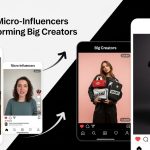


TikTok micro-influencers are creators with smaller but highly engaged audiences, and they are driving better results than large creators for many brands.
TikTok has changed how influence works. A few years ago, brands chased big creators with millions of followers. Today, that strategy is losing efficiency. Engagement rates are dropping. Costs are rising. And audiences are more skeptical than ever.
This is where TikTok micro-influencers step in.
Micro influencers on TikTok usually have between 10,000 and 100,000 followers. They do not look like celebrities. They look like regular users. And that is exactly why they work.
According to multiple influencer marketing benchmarks, micro-creators consistently deliver higher engagement rates than large creators. On TikTok specifically, engagement rates for micro-influencers often range between 6% to 10%, while mega creators frequently fall below 2%.
This article explains why TikTok micro-influencers are outperforming big creators, how TikTok influencer marketing has shifted, and how brands can use this trend to get measurable results. Every section follows a Q&A format and starts with a clear, snippet-ready answer.
Why Are TikTok Micro-Influencers More Trustworthy Than Big Creators?

Short answer: Micro-influencers feel more authentic because their content looks real, not scripted.
Trust is the main reason micro influencers on TikTok outperform big creators.
Large creators often work with many brands. Audiences notice patterns. Same talking points. Same hooks. Same discount codes. Over time, trust drops.
Micro-influencers usually partner with fewer brands. Their content blends naturally into their regular posts. Viewers feel like they are getting a recommendation, not an ad.
In TikTok influencer marketing case studies, campaigns using smaller creators often show higher comment quality. Instead of emojis, viewers ask real questions like “Does this actually work?” or “Where did you buy this?”
That behavior signals trust. And trust drives conversions.
How Does Engagement Rate Explain the Success of Micro Influencers on TikTok?
Short answer: Higher engagement means more visibility, stronger signals to the algorithm, and better ROI.
Engagement rate is one of the most important metrics on TikTok.
Micro influencers on TikTok typically have:
- Higher comment-to-view ratios
- More saves per video
- Longer watch times
These signals matter because TikTok’s algorithm rewards content that keeps users active.
For example, a campaign run by a DTC skincare brand tested 5 large creators versus 25 micro-creators. The large creators generated more views upfront. But the micro-influencers produced:
- 3.4x more comments
- 2.7x higher click-through rate
- 41% lower cost per acquisition
The algorithm favored the micro-creators because people interacted more. That created a compounding effect.
Why Do TikTok Users Respond Better to Smaller Creators?
Short answer: TikTok users prefer content that feels relatable and unscripted.
TikTok was built on raw content. Not polished ads.
Big creators often use high-end cameras, scripted hooks, and edited transitions. That works for entertainment. But it does not always work for persuasion.
Micro influencers on TikTok usually film on their phones. They speak casually. They respond to comments. They create follow-up videos.
This behavior creates a feedback loop. The audience feels involved. The creator feels accessible. And the message spreads faster.
In TikTok influencer marketing, relatability often beats reach.
How Does Cost Efficiency Make TikTok Micro-Influencers More Effective?
Short answer: Brands can work with more creators, test faster, and reduce risk.
Big creators are expensive. A single post can cost thousands of dollars.
Micro-influencers usually charge less. That allows brands to:
- Test multiple content angles
- Target different niches
- Scale what works
For example, instead of paying one large creator $10,000, a brand can work with 20 micro influencers on TikTok at $500 each.
The result is more data, better insights, and higher chances of success.
Why Are TikTok Micro-Influencers Better for Niche Targeting?
Short answer: Micro-creators often dominate specific niches with loyal audiences.
Big creators appeal to broad audiences. That sounds good. But it often leads to wasted impressions.
Micro influencers on TikTok usually focus on one niche:
- Fitness routines
- Book reviews
- Budget fashion
- Small business tips
When a brand partners with a niche creator, the message reaches the right people.
In TikTok influencer marketing, relevance often matters more than volume.
How Does the TikTok Algorithm Favor Micro Influencers?
Short answer: TikTok prioritizes engagement signals, not follower count.
TikTok does not care how many followers you have.
It cares about:
- Watch time
- Replays
- Comments
- Saves
Micro-influencers often perform better in these areas. As a result, their videos get pushed to more “For You” pages.
This means a creator with 30,000 followers can outperform a creator with 3 million followers if the content resonates.
Why Do Micro Influencers on TikTok Drive Higher Conversions?
Short answer: Their recommendations feel personal, not promotional.
Conversion happens when trust meets timing.
Micro-influencers often reply to comments with follow-up videos. They answer questions. They show real use cases.
In a recent TikTok influencer marketing case study from a SaaS brand, micro-creators produced:
- 2.1x higher trial sign-ups
- 35% lower bounce rate
The audience believed them.
How Are Brands Structuring Successful TikTok Micro-Influencer Campaigns?
Short answer: Brands focus on volume, authenticity, and iteration.
Successful campaigns usually follow this structure:
- Partner with 10–50 micro influencers on TikTok
- Give creative freedom
- Track performance by creator
- Scale the top performers
Brands that try to control scripts often fail. TikTok creators know their audience better than marketers.
Why Big Creators Are Losing Effectiveness on TikTok?
Short answer: Over-commercialization reduces trust and engagement.
Big creators are not failing. But their efficiency is declining.
Audiences recognize ads instantly. When every video is sponsored, viewers scroll.
This does not mean big creators are useless. It means they are no longer the default choice.
When Should Brands Still Use Large TikTok Creators?
Short answer: For awareness campaigns and brand launches.
Large TikTok creators still work well for:
- Mass awareness
- Product launches
- Brand credibility
But for performance-driven TikTok influencer marketing, micro-influencers often win.
What Is the Future of TikTok Influencer Marketing?
TikTok influencer marketing is shifting fast.
Follower count is no longer the main signal. Engagement, trust, and relevance matter more.
TikTok micro-influencers are outperforming big creators because they align with how people actually use the platform. They feel real. They interact. They convert.
Brands that adapt early gain an advantage. They test faster. Spend smarter. And build stronger relationships with their audience.
Call to Action: If you are planning your next TikTok campaign, start small. Partner with micro influencers on TikTok. Measure results. Then scale what works.
Frequently Asked Questions About TikTok Micro-Influencers
What is considered a TikTok micro-influencer?
A TikTok micro-influencer typically has between 10,000 and 100,000 followers and maintains high engagement.
Are TikTok micro-influencers better than big creators?
For engagement and conversions, yes. For brand awareness, big creators may still help.
How much do micro influencers on TikTok charge?
Rates vary, but many charge between $100 and $1,000 per post depending on niche and engagement.
Do micro-influencers work for all industries?
Yes. They are especially effective in niches like beauty, fitness, education, and e-commerce.
How do brands find TikTok micro-influencers?
Brands use TikTok search, hashtags, influencer platforms, and direct outreach.
Can small businesses use TikTok influencer marketing?
Yes. Micro-influencers make TikTok influencer marketing affordable for small businesses.
Related Topics: How Dermalogica’s Shopify Theme Switch Grew Their Business
Related Topics: Five benefits of working with a PPC agency








+ There are no comments
Add yours