


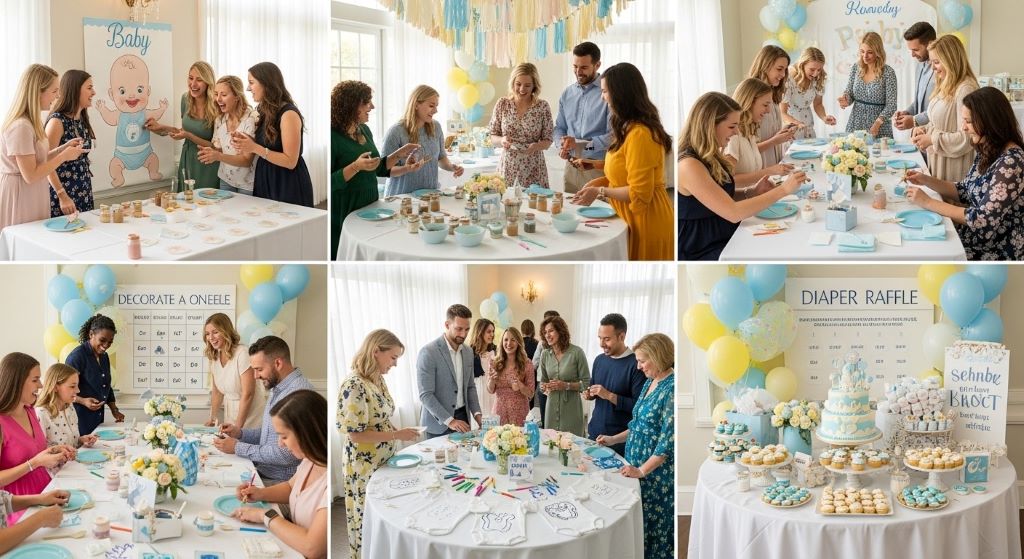
Planning a baby shower for a large group presents unique challenges that smaller gatherings simply don’t face. When your guest list exceeds twenty or thirty people, traditional games that work beautifully for intimate parties can quickly become chaotic and time-consuming. However, with the right approach and preparation, you can create an entertaining celebration that keeps everyone engaged and happy.
Large baby showers require careful planning to ensure no guest feels left out or bored. The key is selecting activities that accommodate many participants without requiring excessive time or complicated logistics. This guide will walk you through everything you need to know about managing games for big baby shower celebrations.
From choosing the right activities to organizing smooth execution, you’ll discover practical strategies that have been tested at real events. Whether you’re hosting fifty guests or a hundred, these tips will help you create memorable entertainment that celebrates the parents-to-be while keeping your sanity intact.
Understanding the Challenges of Large Group Entertainment
Large gatherings create specific obstacles that you must address before the party begins. Recognizing these challenges early allows you to plan solutions rather than scrambling during the event.
First, logistics become significantly more complex with bigger groups. Distributing materials, collecting responses, and judging winners takes considerably longer when you’re dealing with dozens of people instead of a handful. What takes two minutes in a small group might consume twenty minutes with a large crowd.
Additionally, noise levels rise dramatically as guest counts increase. Instructions that everyone easily hears in a living room get lost in the chatter of a large venue. You’ll need amplification or alternative communication methods to ensure everyone understands what’s happening.
Space constraints also become problematic. Activities that require movement or spreading out won’t work well in crowded venues. Therefore, you must carefully consider your venue’s layout when selecting games and planning their execution.
Finally, attention spans vary widely in large groups. Some guests will be eager participants while others prefer observing. Creating a mix of activities that accommodates different comfort levels keeps everyone reasonably satisfied throughout the celebration.
Selecting Appropriate Party Entertainment Ideas
Choosing the right games forms the foundation of successful large baby shower entertainment. Not every activity scales well, so you must be selective about what makes your final lineup.
Look for games that don’t require everyone to participate simultaneously in a specific sequence. Activities where guests can contribute at their own pace work much better than those demanding turn-taking. For instance, a game where guests write advice or predictions lets everyone work independently rather than waiting for their turn.
Consider games with minimal setup and explanation. The more complex your instructions, the more likely confusion will spread through a large crowd. Simple concepts that people grasp immediately lead to smoother execution and better engagement.
Opt for activities that naturally divide large groups into smaller teams. Team-based competitions create manageable subgroups while fostering social interaction among guests who might not know each other well. This approach transforms potential chaos into organized fun.
Evaluate how each game will flow in your specific venue. Walk through the space mentally, imagining where people will stand, sit, or move. If you can’t visualize smooth execution, that activity probably isn’t right for your situation.
Think about timing carefully. With large groups, even quick games take longer than expected. Plan for activities to run at least fifty percent longer than they would with smaller numbers. Building in buffer time prevents your schedule from derailing.
Crowd-Friendly Games That Actually Work
Certain activities have proven track records of success with large baby showers. These crowd-friendly games engage many people without creating bottlenecks or confusion.
Bingo-style games adapt beautifully to any group size. Create custom cards with baby-related words or gift predictions. Guests play independently, and you can have multiple winners throughout the event. The familiar format requires minimal explanation, and everyone participates equally.
Prediction and advice cards let guests contribute meaningful content at their own pace. Provide cards asking questions like anticipated birth date, baby’s first word, or parenting advice. Guests complete these during mingling time, and you compile them into a keepsake book for the parents. This activity doubles as both entertainment and a heartfelt gift.
Diaper raffles generate excitement without complicated gameplay. Guests who bring diapers receive raffle tickets for prize drawings throughout the event. This simple system rewards contributions to the parents’ diaper stockpile while creating multiple moments of excitement.
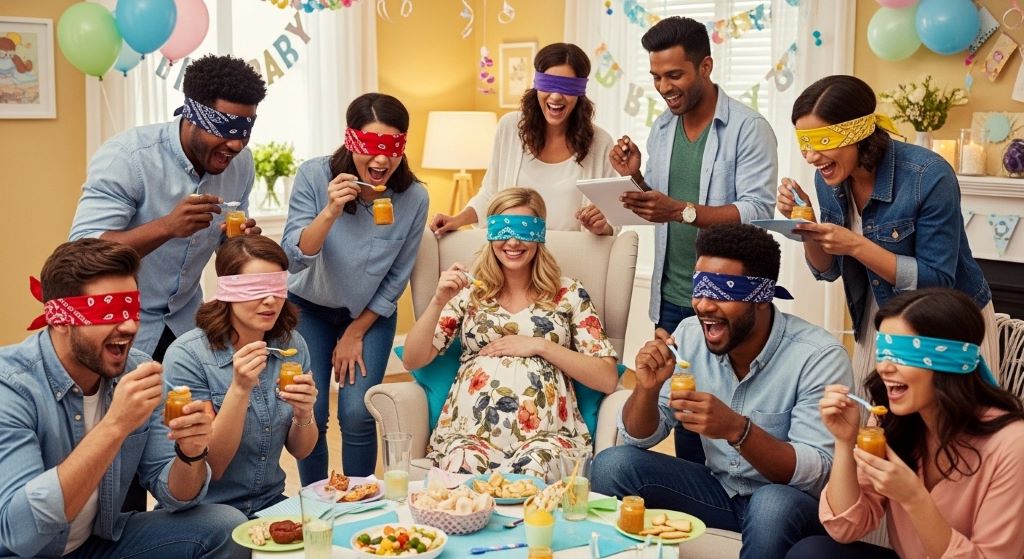
Guess the baby food game works efficiently with large groups when properly organized. Set up a tasting station where guests can sample numbered jars and record their guesses on individual sheets. This format avoids the bottleneck of passing jars around and lets people participate whenever they’re ready.
Photo scavenger hunts engage tech-savvy guests wonderfully. Create a list of photo challenges like finding someone wearing polka dots or capturing a creative group pose. Guests complete challenges using their phones throughout the party, submitting entries via text or social media. This activity runs continuously in the background without stopping other proceedings.
Setting Up Efficient Game Stations
Station-based setups transform game management from overwhelming to manageable. Instead of trying to conduct one activity with fifty people simultaneously, you create multiple interaction points that guests visit independently.
Designate specific areas for different activities. Clear signage helps guests navigate between stations and understand what’s happening at each location. Visual instructions supplement verbal announcements, ensuring people who miss initial explanations can still participate.
Staff each station with a helper if possible. Friends or family members who aren’t hosting can oversee individual games, answer questions, and keep materials organized. This delegation frees you to circulate and ensure everything runs smoothly overall.
Create self-explanatory materials for each station. Laminated instruction cards, example entries, or demonstration boards help guests understand what to do without constant verbal explanation. The more intuitive you make each activity, the less hands-on management it requires.
Establish a logical flow between stations. If possible, arrange them so guests naturally progress from one to another. However, avoid creating rigid sequences that cause crowding. Guests should feel free to visit stations in any order that suits their timing.
Keep supplies abundantly stocked. Running out of game sheets or pens creates frustration and delays. Overestimate quantities significantly, and position extra materials where helpers can easily access them for restocking.
Managing Timing and Flow
Effective time management separates successful large baby showers from chaotic disasters. Your timeline must be both structured and flexible to accommodate the unpredictability of big groups.
Start with a realistic schedule that builds in substantial buffer time. If a game typically takes ten minutes with a small group, allocate twenty to thirty minutes for a large crowd. This padding prevents the cascade effect where one delayed activity throws off your entire timeline.
Space activities strategically throughout the event. Don’t front-load all games into the first hour or save everything for the end. Interspersing entertainment with eating, gift opening, and socializing creates natural rhythm and prevents fatigue.
Use background activities to fill transition periods. While guests arrive or during food service, have opt-in games available that don’t require everyone’s attention. These filler activities keep early arrivals entertained and accommodate guests who want continuous engagement.
Signal transitions clearly. Whether you’re using a microphone, bell, or simply raising your voice, you need a consistent method for capturing attention and announcing what’s happening next. Practice your attention-getting technique before the party so it works reliably.
Monitor energy levels and adjust accordingly. If people seem tired or restless, it’s okay to skip a planned game or move more quickly through activities. Flexibility shows better judgment than rigidly sticking to a schedule that isn’t working.
Communication Strategies for Large Venues
Getting information to everyone simultaneously becomes exponentially harder as group size increases. Effective communication prevents confusion and keeps activities running smoothly.
Invest in amplification if your venue is large or noisy. Even a simple portable speaker with a microphone makes a tremendous difference. Being heard clearly eliminates repeated explanations and reduces frustration for both hosts and guests.
Create visual aids that supplement verbal instructions. Posters, slides, or display boards let guests reference information independently. People who miss spoken instructions or need clarification can consult visual materials without interrupting the flow.
Designate roaming helpers who can answer questions and provide assistance. These support people fill information gaps and help guests who are confused or need materials. They also alert you to problems developing in different areas of the venue.
Use group messaging if appropriate for your guest demographic. Creating a party hashtag or text group lets you share real-time updates, photos, and instructions directly to phones. This modern approach works especially well for tech-comfortable crowds.
Repeat important information multiple times. Announce game winners, meal service, and schedule changes at least twice, waiting a minute or two between announcements. Repetition ensures people engaged in conversations still receive key messages.
Prize Management and Distribution
Handling prizes efficiently prevents delays and ensures everyone feels the distribution process is fair. Large groups require systematic approaches to recognize winners and distribute rewards.
Prepare more prizes than you think necessary. Having extra small prizes lets you recognize more people and reduces disappointment. Dollar store items, candy bags, or small gift cards work perfectly as consolation prizes or honorable mentions.
Establish clear winning criteria before games begin. Ambiguity about who won creates awkward situations with large groups. Whether it’s first person finished, most correct answers, or random drawing, make the determination method obvious upfront.
Distribute prizes immediately after each activity when possible. Delaying until the end means tracking winners and makes distribution more complicated. Quick reward delivery maintains excitement and clearly links prizes to specific achievements.
Create a prize table with clear labels. For games with multiple winners or categories, organize prizes by game name or winning criteria. This organization speeds distribution and prevents confusion about who should receive what.
Consider incorporating prizes into activities themselves. For example, if playing shower bingo, let winners select prizes from a displayed collection immediately upon winning. This approach makes distribution nearly automatic.
Adapting Traditional Games for Larger Groups
Many beloved baby shower games can be modified to work with bigger crowds. Creative adaptation preserves the spirit of classic activities while addressing scalability challenges.
The clothespin game traditionally involves everyone wearing a pin and trying to collect others by catching rule violations. For large groups, limit play to specific time windows rather than the entire party. Announce play periods where the game is active, then pause it during other activities.
Baby predictions normally involve guessing details about the upcoming arrival. Instead of going around sharing predictions verbally, provide cards guests complete during mingling. Later, read selections aloud, creating entertainment without requiring individual participation.
Measuring the belly usually has one person guess then everyone else tries. With large groups, provide a ribbon or string and let guests cut their estimate. Collect all estimates, then reveal the actual measurement and identify closest guesses. This parallel approach eliminates wait time.
Don’t say baby typically restricts a specific word throughout the party. With large crowds, this becomes difficult to monitor fairly. Instead, create shorter game periods where the rule applies, or limit play to specific areas or tables, making enforcement manageable.
Name that tune baby edition can’t practically involve everyone shouting answers. Instead, divide guests into teams or provide individual answer sheets. Play song snippets and let people write responses, then reveal answers and determine winners systematically.
Handling Reluctant Participants
Not everyone loves party games, and larger groups mean more people who prefer not to participate actively. Respecting different comfort levels while maintaining energy requires thoughtful planning.
Include opt-out activities that still feel inclusive. Stations with advice cards, well wishes, or photo booths let less game-oriented guests contribute meaningfully without competing or performing.
Avoid singling out non-participants. Never force reluctant guests into the spotlight or make them feel pressured to join activities. This approach creates discomfort and potentially ruins the party atmosphere for everyone.
Design some games as spectator-friendly. Activities with entertaining elements for watchers keep everyone engaged even if they’re not actively playing. Funny moments, surprising reveals, or interesting content benefit the entire room.
Position seating so non-participants can comfortably observe without feeling excluded. Arranging chairs in a U-shape or theater-style lets people choose their engagement level while still feeling part of the celebration.
Recognize that helping and observing are forms of participation. Thank people who assist with setup, take photos, or help others. Acknowledging these contributions shows that valuable participation takes many forms.
Managing Supplies and Materials
Adequate preparation of supplies prevents mid-game scrambles that derail momentum. Large groups demand careful inventory and strategic organization.
Calculate materials generously. Count confirmed guests, add twenty percent for unexpected plus-ones, then add another ten percent buffer. This triple-layered approach ensures you won’t run short even if your estimates are off.
Pre-organize supplies into sets or bundles. If a game needs pens and papers, group them together in quantities for tables or teams. This organization speeds distribution and ensures complete sets reach everyone.
Create a supply checklist and verify everything before the party. Discovering missing materials minutes before guests arrive creates unnecessary stress. Checking off items the night before gives you time to acquire anything forgotten.
Designate a supply headquarters where extra materials live. One table or area serves as your resupply point, keeping backup items organized and accessible. Helpers know where to find what they need without asking you.
Bring emergency backup supplies. Extra pens inevitably stop working, papers get torn, and items disappear. Having duplicates of essentials saves activities when unexpected problems arise.
Incorporating Technology Effectively
Modern technology offers solutions to many large group management challenges. Strategic tech use enhances entertainment while simplifying logistics.
Poll apps and live voting platforms engage large audiences instantly. Services like Mentimeter or Poll Everywhere let everyone participate simultaneously using phones. Responses display in real-time, creating excitement and eliminating the logistics of collecting physical answers.
Photo sharing apps centralize party memories. Creating a shared album lets guests upload pictures throughout the event. This digital scrapbook becomes a gift for parents and encourages participation without formal game structure.
QR codes simplify information access. Create codes linking to game instructions, RSVP forms, or registry information. Guests scan codes with phones to access details independently, reducing the need for verbal explanation or printed handouts.
Presentation software keeps activities moving smoothly. Creating a simple slideshow with game instructions, questions, or scorekeeping helps maintain focus and timing. Visual presentation works especially well in venues with screens or projectors.
However, remember that technology can fail. Always have low-tech backup plans for activities depending on wifi, apps, or devices. Technical difficulties shouldn’t derail your carefully planned entertainment.
Conclusion
Managing baby shower games for large guest lists requires thoughtful planning and strategic execution. By selecting party entertainment ideas that naturally accommodate many participants and focusing on crowd-friendly games, you create celebrations that flow smoothly despite the complexity of big groups.
The keys to success include choosing scalable activities, establishing efficient station-based setups, and maintaining clear communication throughout the event. Preparing abundant supplies, managing time realistically, and respecting varying participation preferences ensures all guests feel welcome and entertained.
Remember that flexibility matters more than perfection. Large groups bring unpredictability, and your willingness to adjust keeps things running smoothly even when challenges arise. Focus on creating an enjoyable atmosphere rather than executing every detail flawlessly.
With proper preparation using the strategies outlined in this guide, you can confidently host baby showers of any size. The celebration will honor the parents-to-be while providing memorable entertainment for all attendees, regardless of how many guests share in the joy.
Frequently Asked Questions
How many games should I plan for a baby shower with fifty or more guests?
Plan three to five activities for a two to three hour party with a large group. This quantity provides variety without overwhelming guests or consuming too much time. Include a mix of quick icebreakers, longer engaged activities, and background games guests can complete at their own pace. Remember that everything takes longer with big groups, so fewer well-executed games work better than numerous rushed activities.
What if not everyone wants to participate in baby shower games?
Offer a variety of engagement options including passive activities like advice cards or photo stations that don’t require competitive participation. Never force guests into games or single out non-participants. Design your space so people can comfortably observe without feeling excluded. Some guests naturally prefer socializing over structured activities, and respecting these preferences creates a more comfortable atmosphere for everyone.
How do I keep large baby shower games organized without getting overwhelmed?
Use station-based setups where guests visit different game areas independently rather than trying to manage one activity with everyone simultaneously. Recruit helpers to oversee individual stations while you maintain overall flow. Prepare materials in advance, create visual instruction cards, and use clear signage. Building buffer time into your schedule and having backup supplies ready prevents common problems from becoming crises.
What types of prizes work best for large baby shower groups?
Choose a mix of prize values, including several nicer items for major competitions and many small prizes for participation or runner-up recognition. Gift cards, candles, bath products, and gourmet treats appeal to most people. Purchase more prizes than you think necessary to acknowledge multiple winners and provide consolation prizes. Dollar stores offer budget-friendly options for bulk prize buying without compromising quality.
How can I ensure all guests hear game instructions in a large, noisy venue?
Invest in a portable speaker system or microphone if your venue is large or has poor acoustics. Create visual instruction boards or slides that supplement verbal explanations. Position helpers throughout the space who can answer questions and clarify instructions for guests who didn’t hear announcements. Repeat important information multiple times and use attention-getting signals like bells or raised hands before speaking.
Related Topics:
Pregnancy and Warts: Wart Removal While Pregnant Guide





+ There are no comments
Add yours