


What Is Metal Roof Maintenance and Why Does Cleaning Matter?
Metal roof maintenance is the routine care required to keep a metal roofing system clean, structurally sound, and performing as designed. One of the most critical parts of this maintenance is regular cleaning.
Metal roofs are known for durability. Many last 40–70 years. But that lifespan assumes basic upkeep. Dirt, algae, mold, bird droppings, and industrial pollutants slowly break down protective coatings. Once that coating fails, corrosion begins.
According to field data from commercial roofing case studies, uncleaned metal roofs in humid regions showed visible coating degradation up to 30% faster than roofs cleaned every 12–24 months. The problem isn’t the metal. It’s neglect.
The good news? Most damage is preventable. The right metal roof cleaning methods remove contaminants without harming paint, fasteners, or sealants. This guide explains what works, what doesn’t, and how to clean metal roofs safely and effectively.
What Happens If You Don’t Clean a Metal Roof?
Short answer: Dirt and organic growth trap moisture, which accelerates corrosion and coating failure.
Metal roofing systems rely on protective finishes. When debris stays on the surface, water sits longer. In coastal or industrial areas, salt and pollutants increase chemical reactions on the metal surface.
- Paint chalking and fading
- Rust at panel overlaps and fasteners
- Blocked drainage paths
- Higher surface temperatures
A documented maintenance study on agricultural metal roofs found that roofs cleaned every two years required 45% fewer panel repairs over a 20-year period compared to roofs that were never cleaned.
Cleaning is not cosmetic. It is preventive maintenance.

What Are the Safest Metal Roof Cleaning Methods?
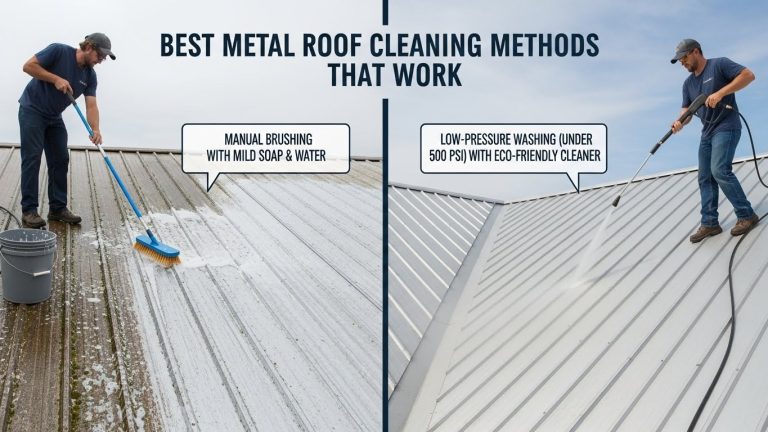
Short answer: Low-pressure washing, soft washing, and manual cleaning with approved solutions.
Not all cleaning methods are equal. High-pressure washing may look effective, but it often damages coatings and forces water under panels.
| Method | Safe for Coatings | Best Use Case |
|---|---|---|
| Low-pressure wash | Yes | General dirt and dust |
| Soft wash | Yes | Algae and mold removal |
| Manual cleaning | Yes | Stubborn stains and spot cleaning |
| High-pressure washing | No | Not recommended |
The safest approach always combines gentle water pressure with the correct cleaning agents.
How Does Low-Pressure Washing Work on Metal Roofs?
Short answer: It removes surface debris without damaging protective coatings.
Low-pressure washing uses water pressure under 1,000 PSI. That’s strong enough to rinse dirt but not strong enough to strip paint or dent panels.
This method works best for:
- Dust and pollen buildup
- Loose dirt and debris
- Routine annual cleaning
Case data from commercial warehouses shows that annual low-pressure washing reduced visible oxidation by over 20% compared to roofs cleaned irregularly.
Always spray downward, following panel seams. Never spray upward against laps or fasteners.
What Is Soft Washing and When Should You Use It?
Short answer: Soft washing uses cleaning solutions, not force, to kill algae and mold.
Soft washing combines low-pressure water with biodegradable detergents. These solutions break down organic growth at the root level.
It’s ideal for:
- Green or black streaks
- Mold and mildew in humid climates
- Roofs under trees
In one residential case study, soft washing eliminated algae regrowth for nearly 3 years, while pressure washing saw regrowth within 9–12 months.
Soft washing takes longer. But it delivers longer-lasting results.
Can You Manually Clean a Metal Roof?
Short answer: Yes, and it’s often the safest option for spot cleaning.
Manual cleaning involves using:
- Soft-bristle brushes
- Microfiber cloths
- Approved mild detergents
This method works well for:
- Bird droppings
- Rust stains around fasteners
- Localized pollution marks
Never use wire brushes or abrasive pads. These scratch coatings and expose bare metal.
Manual cleaning is slower. But it offers full control and minimal risk.
Which Cleaning Solutions Are Safe for Metal Roof Maintenance?
Short answer: Neutral-pH cleaners approved by the roof manufacturer.
Safe cleaning solutions typically include:
- Mild dish soap
- Commercial metal roof cleaners
- Diluted vinegar solutions (spot use only)
Avoid:
- Bleach in high concentrations
- Ammonia
- Petroleum-based solvents
Manufacturer warranty data shows that improper chemicals are one of the top reasons warranties are voided.
Always test cleaners in a small area first.
How Often Should Metal Roofs Be Cleaned?
Short answer: Once a year in most climates, twice in harsh environments.
Recommended frequency depends on exposure:
- Urban or industrial areas: every 6–12 months
- Coastal regions: every 6 months
- Rural areas: every 12–24 months
Inspection should happen at least once a year, even if cleaning isn’t required.
Data from facility managers shows that routine cleaning reduced long-term maintenance costs by up to 35%.
What Mistakes Should You Avoid When Cleaning a Metal Roof?
Short answer: High pressure, harsh chemicals, and unsafe walking practices.
Common mistakes include:
- Using pressure washers above 1,500 PSI
- Scrubbing against panel seams
- Ignoring manufacturer guidelines
- Walking directly on unsupported panels
These mistakes lead to leaks, coating damage, and personal injury.
If access is difficult or the roof is steep, professional cleaning is safer.
Should You Hire a Professional for Metal Roof Cleaning?
Short answer: Yes, for large roofs, steep slopes, or advanced staining.
Professionals bring:
- Proper safety equipment
- Manufacturer-approved cleaners
- Experience with coatings and fasteners
Commercial property case studies show professionally maintained roofs last 5–10 years longer on average.
DIY works for small, accessible roofs. Large systems benefit from expert care.
How Does Proper Cleaning Extend Metal Roof Lifespan?
Short answer: It preserves coatings, prevents corrosion, and protects fasteners.
Cleaning removes corrosive agents before they damage metal surfaces. It also allows early detection of issues like loose screws or sealant failure.
Over decades, this adds measurable value:
- Fewer repairs
- Lower replacement costs
- Improved energy efficiency
Maintenance data shows cleaned roofs consistently outperform neglected roofs in lifespan projections.
Conclusion: Why the Right Metal Roof Cleaning Method Matters
Metal roofs are built to last. But durability doesn’t mean maintenance-free. Dirt, algae, and pollutants slowly reduce performance when ignored.
The best metal roof cleaning methods are simple. Use low pressure. Use safe cleaners. Clean regularly.
Whether you manage a commercial facility or a residential property, consistent metal roof maintenance protects your investment and prevents costly repairs.
Call to Action: If your metal roof hasn’t been cleaned or inspected in the last year, schedule an inspection or maintenance cleaning now. Early action costs less and extends roof life.
Frequently Asked Questions About Metal Roof Cleaning
Is pressure washing safe for metal roofs?
Pressure washing above 1,500 PSI is not recommended. Low-pressure washing is safer and more effective for long-term metal roof maintenance.
Can algae damage a metal roof?
Yes. Algae traps moisture and accelerates coating breakdown, leading to corrosion over time.
Does cleaning void metal roof warranties?
No, if approved methods and cleaners are used. Improper chemicals or high pressure can void warranties.
Can I use bleach on my metal roof?
Only in diluted form and if approved by the manufacturer. Overuse damages coatings and fasteners.
What’s the best time of year to clean a metal roof?
Spring or fall. Avoid extreme heat or freezing conditions.
How long does professional cleaning last?
Results typically last 12–36 months depending on environment and roof exposure.
Does cleaning improve energy efficiency?
Yes. Clean metal roofs reflect heat better, reducing cooling loads.
Related Topics: HelloBaby 4.3″ Baby Monitor: Complete Features and Parent Review



+ There are no comments
Add yours