



Managing sensitive information is a critical responsibility for every small business owner. From employee records to client contracts, your office handles documents that could cause serious problems if they fall into the wrong hands. Understanding proper disposal techniques protects your business, your employees, and your customers from potential data breaches and identity theft.
Why Document Security Matters for Small Businesses
Small offices often handle the same types of sensitive information as larger corporations. However, they typically have fewer resources dedicated to security protocols. This makes them attractive targets for criminals seeking valuable data. Moreover, regulatory requirements apply regardless of company size.
Data breaches can devastate small businesses financially and reputationally. The average cost of a breach continues to rise each year. Beyond financial losses, your business could face legal consequences and lose customer trust permanently. Therefore, implementing proper document disposal practices is essential, not optional.
Understanding What Needs Secure Disposal
Not every piece of paper requires the same level of security when discarding. Knowing which documents contain sensitive information helps you allocate resources effectively. Confidential materials include anything with personal identifiers, financial data, or proprietary business information.
Employee files containing social security numbers, salary information, and performance reviews need careful handling. Client records with contact details, purchase histories, and payment information also require protection. Additionally, internal documents like strategic plans, vendor contracts, and financial statements should never end up in regular trash bins.
Even seemingly innocent documents can become dangerous in the wrong hands. Meeting notes might reveal business strategies. Shipping labels contain addresses and contact information. Draft documents often include details that never made it to final versions. Consequently, developing a clear classification system helps everyone in your office understand which materials need special attention.
Shredding: The Foundation of Document Disposal
Shredding remains the most common and effective method for destroying paper documents. Modern shredders come in various types, each offering different security levels. Cross-cut shredders create confetti-like pieces that are nearly impossible to reconstruct. Micro-cut models provide even greater security by producing tiny particles.
Investing in a quality shredder makes sense for offices that regularly handle confidential materials. Look for machines that can handle staples and paper clips to streamline the process. Consider capacity as well, since frequent emptying disrupts workflow. Furthermore, some shredders can destroy credit cards, CDs, and other media containing sensitive data.
However, shredders require maintenance to function properly. Oil the blades regularly according to manufacturer instructions. Clear paper jams promptly to prevent damage. Keep the area around your shredder clean and organized. These simple steps extend machine life and ensure consistent performance.
Professional Shredding Services
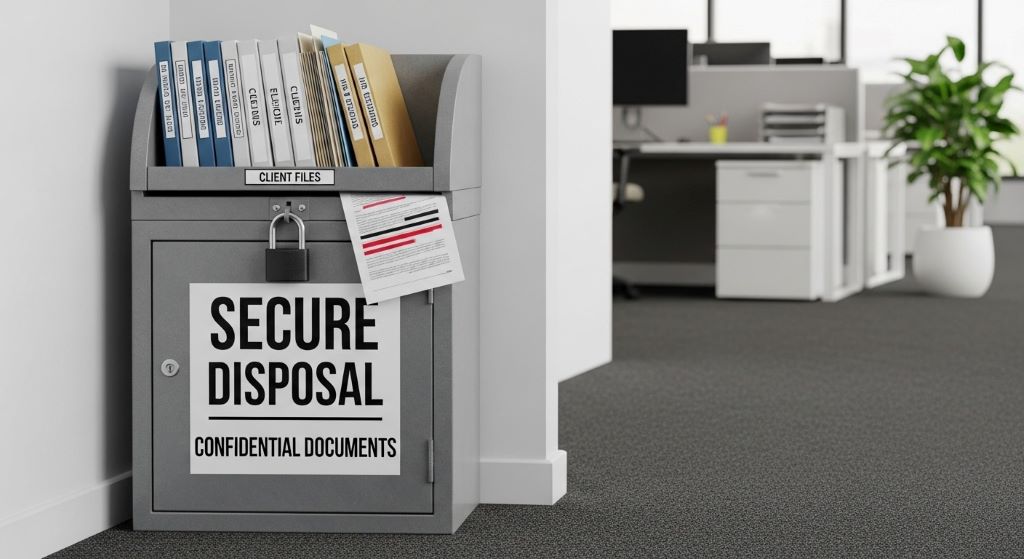
Many small offices benefit from outsourcing document destruction to professional services. These companies specialize in secure disposal methods and understand regulatory requirements thoroughly. They typically provide locked bins for your office, then collect and destroy contents on a regular schedule.
Professional services offer several advantages over in-house shredding. They handle large volumes efficiently, saving your staff valuable time. Their industrial-grade equipment completely destroys documents beyond any possibility of reconstruction. Additionally, reputable companies provide certificates of destruction for your records, which helps with business compliance audits.
Choosing the right service requires careful evaluation. Verify that providers follow industry standards and hold relevant certifications. Ask about their chain of custody procedures to ensure documents remain secure during transport. Read reviews from other small businesses to gauge reliability and customer service quality. Request a quote and compare pricing structures before committing.
Digital Document Disposal Strategies
Paper is not the only concern in modern offices. Digital files containing confidential information require equally careful handling. Simply deleting files or emptying the recycle bin does not permanently remove data from hard drives. Specialized software can often recover these supposedly deleted files.
Permanent deletion requires overwriting data multiple times with random information. Several software programs perform this task effectively and affordably. For extremely sensitive information, physical destruction of storage media provides the highest security level. This involves drilling holes through hard drives or using degaussing equipment to scramble magnetic data.
Cloud storage presents additional considerations for document disposal. Understand your provider’s data retention policies and deletion procedures. Ensure that when you delete files, they are removed from all servers and backup systems. Furthermore, maintain control over who can access cloud-stored documents through careful permission management.
Creating an Office Disposal Policy
Consistency comes from having clear written procedures that everyone follows. Your disposal policy should outline what constitutes confidential information and specify appropriate disposal methods for each category. Include timelines for retaining different document types before destruction.
Make the policy accessible to all employees and provide training on proper implementation. Designate specific staff members to oversee disposal procedures and conduct regular audits. Update the policy periodically to address new types of documents or changing regulations. Clear communication ensures everyone understands their responsibilities regarding document security.
Your policy should also cover what happens when employees leave the company. Establish procedures for securing or transferring their files and removing their access to digital systems. Additionally, address how to handle documents found in unexpected places, like forgotten papers in drawers or files saved to personal devices.
Compliance Considerations
Various regulations govern how businesses must handle and dispose of sensitive information. Healthcare offices must follow HIPAA requirements for patient records. Financial institutions face regulations under the Gramm-Leach-Bliley Act. The Fair and Accurate Credit Transactions Act applies to businesses that use consumer credit information.
Understanding which regulations apply to your industry is crucial for business compliance. Penalties for violations can include substantial fines and legal action. Moreover, customers increasingly expect businesses to protect their information responsibly. Demonstrating commitment to data security can become a competitive advantage.
Retention schedules specify how long you must keep different document types before disposal. Tax records typically require seven-year retention. Employment records have varying requirements depending on document type. Keep a detailed retention schedule and follow it consistently to stay compliant while minimizing storage needs.
Training Your Team
Even the best policies fail without proper staff training. Everyone who handles documents needs to understand security protocols and their importance. Regular training sessions keep security awareness high and address new challenges as they emerge.
Make training engaging and practical rather than simply distributing written policies. Use real examples relevant to your office operations. Demonstrate proper shredding techniques and explain why certain methods are necessary. Encourage questions and create an environment where employees feel comfortable seeking clarification.
Consider appointing security champions within your office who receive additional training and serve as resources for colleagues. These individuals can spot potential security gaps and suggest improvements. Furthermore, recognize and reward employees who demonstrate exemplary attention to document security.
Developing Sustainable Practices
Environmental responsibility should factor into your disposal strategy. Shredded paper can often be recycled, though you should verify that your recycling service accepts it. Some professional shredding companies specialize in environmentally friendly disposal and provide documentation of recycling efforts.
Reducing paper usage in the first place minimizes disposal needs. Digital workflows eliminate many documents entirely. When printing is necessary, use both sides of the paper and choose recycled options. However, balance environmental concerns with security requirements. Never compromise data protection for convenience or cost savings.
Common Mistakes to Avoid
Many small offices make avoidable errors in document disposal. Treating all trash the same is perhaps the most dangerous mistake. Regular bins are not secure, and sensitive documents can easily be retrieved. Similarly, tearing papers by hand provides minimal security compared to proper shredding.
Delaying disposal creates security risks and storage problems. Documents pile up in boxes or drawers, increasing the chance of loss or theft. Establish regular disposal schedules and stick to them. Additionally, avoid mixing confidential documents with regular recycling, even if shredded, without verifying your provider’s security measures.
Failing to consider digital security is increasingly common. Remember that printers, copiers, and fax machines often store copies of documents on internal hard drives. When replacing this equipment, ensure proper data wiping or physical destruction of storage components. Furthermore, never throw old computers or storage devices in regular trash without first destroying the data.
Conclusion
Protecting confidential information through proper disposal practices is fundamental for every small office. The methods you choose depend on your specific needs, document volume, and budget constraints. Whether you invest in quality shredding equipment or partner with professional services, the important thing is maintaining consistent, secure disposal methods throughout your organization.
Remember that document security extends beyond paper to include digital files and storage media. Developing comprehensive policies, training your team thoroughly, and staying informed about business compliance requirements creates a strong foundation for protecting sensitive information. Taking these steps seriously safeguards your business, maintains customer trust, and ensures you meet legal obligations.
Small offices may have limited resources, but they face the same security challenges as larger organizations. By implementing the strategies outlined in this guide, you can create effective disposal procedures that protect your business without overwhelming your budget or staff. Start today by assessing your current practices and identifying areas for improvement.
Frequently Asked Questions
How often should a small office shred documents?
The frequency depends on your document volume and available storage. Most small offices benefit from weekly or bi-weekly shredding schedules. Establish a routine that prevents accumulation while remaining practical for your team. For extremely sensitive materials, consider immediate destruction rather than storing them for later shredding.
Can I recycle shredded paper from confidential documents?
Yes, in most cases shredded paper can be recycled safely. However, verify with your recycling service that they accept shredded material, as some facilities cannot process it effectively. Professional shredding services often include recycling as part of their standard process, providing both security and environmental benefits.
What is the most cost-effective disposal method for small offices?
This depends on your document volume and staff time availability. For offices with moderate amounts of confidential materials, purchasing a quality cross-cut shredder offers the best value. High-volume situations may find professional services more economical when factoring in staff time and equipment maintenance costs.
How long should we keep different types of documents before disposal?
Retention periods vary by document type and industry regulations. Tax-related documents typically require seven-year retention. Employment records range from one to thirty years depending on the specific type. Consult with your accountant or legal advisor to create a retention schedule appropriate for your business.
Are there legal requirements for how small businesses dispose of documents?
Yes, various federal and state laws govern document disposal depending on your industry and the information types you handle. These regulations specify secure disposal methods and establish penalties for non-compliance. Research requirements specific to your business or consult with a compliance professional to ensure you meet all obligations.
Related Topics:
How Long Should My Business Sign Last? Maintenance Hacks to Prolong Its Life
When is Black Friday, and what strategies can retailers use?




+ There are no comments
Add yours