






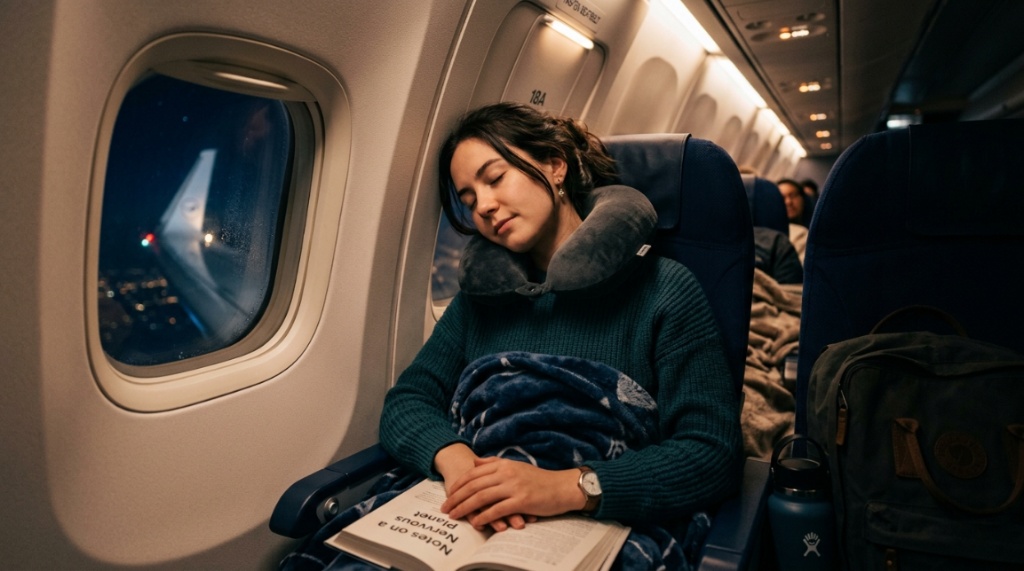
You know that feeling. You’ve just settled into your cramped economy seat, buckled up, and closed your eyes. But within twenty minutes, your neck is stiff, your head is bobbing, and any hope of arriving refreshed is gone. The root cause? A subpar travel pillow that offers no real support. If you’ve ever woken up with a crick in your neck that lasted days, you’re not alone. In this guide, I’m going to break down exactly how to find a comfortable neck pillow for flights in 2026—without the trial and error. We’ll dive into the science of support, the best materials, and the specific features that matter most for long-haul comfort.
Why Does a Standard U-Shaped Pillow Fail You?
The classic U-shaped pillow fails because it pushes your head forward rather than supporting it. This forward flexion puts pressure on your cervical spine, causing stiffness and fatigue. Most cheap options lack density, so they compress to nothing within minutes of use.
The Physics of Neck Support
Your neck is designed to maintain a natural “C” curve. When you fall asleep upright, your muscles relax, and your head (which weighs around 10–12 pounds) drops forward. A good pillow fills the gap between your shoulder and ear to keep that curve aligned. If the pillow is too soft, your head sinks; if it is too thick, your head juts forward at an awkward angle.
Why “One Size Fits All” Is a Myth
Travel pillows are not universal. A pillow that fits a 6’2″ man will swallow a petite woman. The distance between your ear and shoulder (cervical height) dictates the thickness you need. Measured correctly, you can reduce neck strain by up to 40% compared to using a standard thin neck pillow.
The Hidden Problem with Memory Foam Cooling Gel
While “cooling gel” sounds great, cheap versions often use a thin layer of gel on top of synthetic foam. This traps heat and lacks the recovery density of authentic viscoelastic foam. In 2026, look for phase-change materials (PCM) that actually absorb heat, not just mint-scented fabric.
What Are the Core Features of a Truly Comfortable Neck Pillow?
To find a truly comfortable neck pillow for flights, focus on four pillars: loft (thickness), firmness, contour shape, and fade-resistant adjust ability. If a pillow nails these four, it will outperform a $100 “luxury” brand that only looks good on Instagram. Keep your travel gear spotless during long trips by cleaning up quick messes with a compact Find Hidden Gem Cordless Hand Vacuum before you pack your bags.
Loft: Measuring the Gap Between Ear and Shoulder
To measure your loft, sit sideways against a wall and measure the distance between your ear’s center and the outer edge of your shoulder. Most people fall between 4 and 6 inches. If you buy a pillow thinner than your measurement, you will compensate by tilting your head upward, which strains the scalene muscles.
Firmness Scale: What Does “Medium-Firm” Mean?
Firmness is rated by ILD (Indentation Load Deflection). For flights, look for an ILD between 20 and 30. Below 20 is too soft for sleep; above 30 feel like a rock. You want the foam to compress about 30% when you lay your head down, holding your head steady during turbulence.
Shape: The Paradox of the “Zero-Gravity” Design
Zero-gravity pillows that wrap entirely around the neck often push upward on the chin during sleep. This causes breathing restriction. A better 2026 design is the side-support hybrid: high walls at the side of the neck with a lower cradle in the back for the skull’s occipital base.
Which Pillow Material Is Best for Long-Haul Flights?
For overnight flights exceeding 6 hours, viscoelastic memory foam (shredded or solid) remains the gold standard. Inflatable pillows are better for ultralight packers, but they fail on temperature control and pressure distribution. In 2026, hybrid designs (foam core + inflatable layer) offer the best compromise.
Solid Memory Foam: The Gold Standard
Solid viscoelastic foam conforms to the body’s heat, providing “zero-pressure” feel. However, it is bulky. If you are flying premium economy or first class and have a bulkhead seat, this is your best bet. The density rating should exceed 50kg/m³; anything less will degrade within six months.
Shredded Foam: The Adjustable Competitor
Shredded foam pillows include a zipper that allows you to remove stuffing. This is a huge advantage for customization. You can add or remove fill to match the exact loft you measured earlier. The downside? The lumps can create pressure points if you don’t fluff them properly before takeoff.
The Microbead Trap
Microbeads (polystyrene) shift constantly. While they are lightweight, they provide zero structural support. If you shake your head, the beads move. This causes your neck muscles to micro-flex continuously to stabilize your head, guaranteeing wakefulness. Avoid them unless you are taking a 2-hour nap in a recliner.
How to Choose a Pillow for Window, Middle, and Aisle Seats?
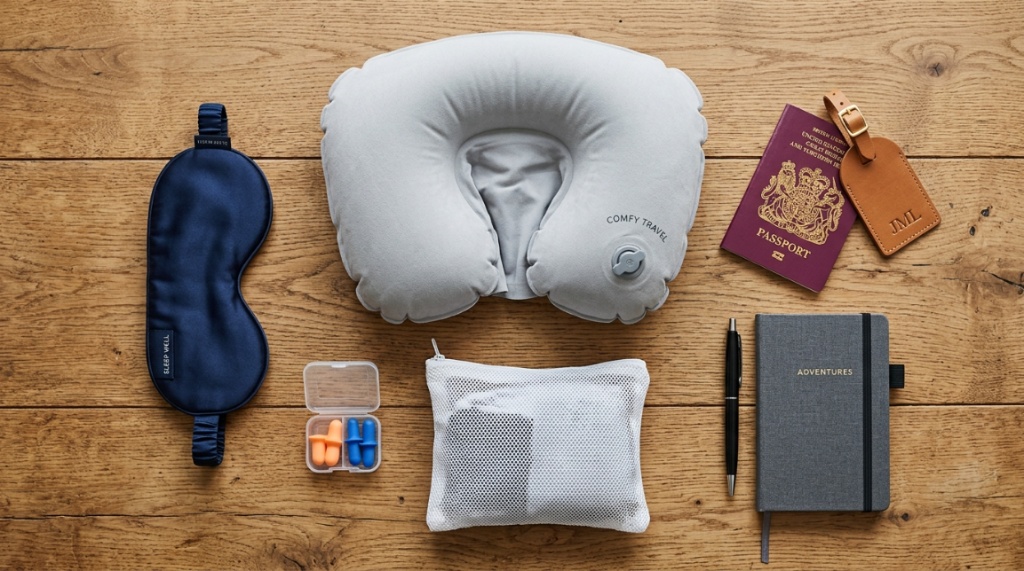
Your seat position dictates your leaning direction. Window seats allow you to lean against the fuselage; aisle seats require you to sit upright. For window seats, a standard back-support shape works. For aisle seats, you need a pillow with a sturdy front chin support to prevent forward chin drop.
Tucking Philosophy for Window Seats
You don’t need a pillow that wraps entirely around the neck. You need a “horseshoe” shape that keeps the head upright while sleeping laterally. Place the thicker section on the side facing the window and leave the front open to breathe.
Chin Support for Aisle Seats
If you are in the aisle, ask for a pillow that extends down the chin (a cervical collar type). This prevents the “nodding off” phenomenon. These look medical, but they are the only way to sleep without leaning. Pair this with a seatback tray desk to rest your arms for stability.
Can a Travel Pillow Work for Middle Seats?
Yes, but you must switch to a “horseshoe back” design. Since you cannot lean on either side, support must come from the rear. In 2026, many brands offer inflatable cushions that curve around the seat’s headrest to hook on the ear. This prevents your head from rolling forward.
Is an Inflatable Neck Pillow Ever a Good Idea?
Yes—when packability is your top priority, the inflatable pillow is the best choice. Modern inflatable pillows use a double-chamber valve system that lets you fine-tune the pressure in 1 PSI increments. You can make them rock-hard at takeoff and soften them as you relax, ensuring your neck never falls into a bad position.
Valve Quality and Air Retention
Most $15 inflatable pillows leak overnight. In 2026, look for pillows with a TPU (thermoplastic polyurethane) bladder rather than PVC. TPU stretches without losing pressure. To test leakage, inflate a pillow fully and sleep on it for 3 hours; if you wake up with the pillow half-deflated, you have a leak.
The “Two-Stage” Inflation Method
When inflating, blow 80% capacity, then wait for the cabin pressure to equalize, then give two more short bursts of air. At altitude, the air expands slightly. If you fill it to 100% on the ground, it will feel like a hard ball in the air. Forgetting this step ruins the firmness balance.
Why Hybrid Pillows are the 2026 Winner
Inflatable pillows lack surface contouring; they only create a flat balloon. The hybrid design solves this by covering the inflatable bladder with a 1-inch layer of foam which allows the jaw to nestle in a slight trough. This yields the comfort of foam with the packability of air.
When Should You Wear a Neck Pillow Backwards?
You should wear a neck pillow backwards (with the closure in the front) when you plan to sleep with your head tilted backward. This restores the cervical curve and relieves pressure on the back of the skull. It is particularly useful for window seats with high headrests.
The Anatomy of Backward Sleeping
Wearing the pillow backward places the thickest support under the C3-C5 vertebrae, which pushes your chin up slightly. This is the “snoring” position, but it prevents the deep forward fold that leads to nerve compression. This works best for those without a hunchback posture.
The Chin Strap Secret
If you opt for a backward orientation, purchase a pillow with a magnetic or snap clip closure. When worn forward, the clip sits at the back of the neck and digs in. When worn backwards, the clip sits in front of the chin, acting as a soft guard to keep your jaw closed while sleeping.
Does the Fill Power of Travel Pillows Affect Durability?
Yes. Fill power refers to the resilience of the foam–how well it bounces back after compression. If you squish a pillow and it takes longer than 3 seconds to return to shape, it is low-density foam which will go flat in 20 flights. Look for “high-resilience” gel foam in 2026.
Testing Resilience at the Store
Fold the pillow in half and hold it for 30 seconds. Release. If the crease remains after 60 seconds, do not buy it. This crease will become a pressure line that digs into your neck on long-haul flights. High-quality foam shows no permanent deformation.
When To Replace Your Pillow
Most experts recommend replacing your travel pillow every 12 to 18 months, or after 50 flights. If you wake up with a “neck strain” symptom despite using the pillow, it’s time. Also, if the foam feels grainier and harder at the edges, replace it immediately. Do not wait for pain.
How Does Sleeping Position Impact Pillow Height Needs?
Your sleeping position directly dictates the height profile you require. Back sleepers require a lower profile at the concave spine. Side sleepers require higher ear-to-shoulder support. Front sleepers should avoid tucking the head down. By identifying your primary position, you can reduce the guesswork by 70%.
Back Sleepers: The “Low Arc” Pillow
Back sleepers need a pillow that does not push the head forward. The loft should be one inch lower than your measurement. The pillow should taper at the midline. This prevents a “double chin” effect while sleeping upright. Use a contoured pillow with inward dip.
Side Sleepers: Height Must Match Shoulder Breadth
Side sleepers should look for a pillow with a high wing that reaches the brow. If the pillow does not fill the space between the neck and shoulder completely, you counteract the curvature. A pillow that is too thin causes your head to tilt sideways towards the shoulder.
Can You Wash a Neck Pillow Without Destroying the Foam?
Most foam pillows should never be machine washed, as water destroys the structural integrity of viscoelastic foam. Instead, you must spot-clean with a damp cloth and a mild detergent. However, in 2026, many premium brands include a “removable inner bladder” separating the foam from the cover, allowing you to wash the outer cover safely.
Step-by-Step Cleaning Guide
First, remove the zipped cover and wash it on a delicate cold cycle. Second, allow the inner foam to aerate in a shaded dry place for two hours. Third, sprinkle a mixture of baking soda and cornstarch on the foam to absorb odors. Let it sit for two hours, then vacuum with a handheld brush attachment. This removes dead skin cells and oils without getting the foam wet.
Desk Fan Drying Method
If you spill water on the foam, do not wring it. Press it with a towel to extract moisture, then place it near a gentle desk fan for 12 hours. Heat is the enemy of foam; avoid hair dryers. Direct heat will shrivel the foam up into a hard brick.
What Features Do Flight Attendants Actually Recommend?
Flight attendants—who sleep in jumpseats with no headrest—recommend a pillow with a tall side wall and a velcro strap that can secure to the seat headrest. Losing the pillow that rolls around the floor is the #1 annoyance. Attachment mechanisms save you from losing your support.
The Headrest Hook-Up
Use a pillow with an integrated hook (a plastic clip that latches around the in-flight entertainment screen block). In dead-sleep, your head will rest heavier; if the pillow moves, you wake up. Hooking stabilizes the pillow, creating a solid brace to push against.
Why Memory Foam is Banned in Some Cabins
In emergency exits or bulkhead rows where inflatable objects are prohibited, oversized foam is acceptable. However, some budget airlines require a “compact” pillow size that fits beneath the seat for landing. Measure the pillow compressed size; ensure it fits a “backpack dimensions” of 18″x14″.
Practical Example: The 3-Hour Micro-Sleep Routine
Set an alarm on your phone for 90-minute intervals. Sleep cycles last about 90 minutes; do not attempt to sleep for 6 hours straight. In the cycle—wear your pillow normally, put on an eye mask, and tilt your seat back 2 inches. This allows the lower back to settle while keeping the neck straight. To find budget-friendly options that don’t skimp on material density, look for comfortable neck pillow for flights models that emphasize firmness specs and washable covers–not just marketing fluff. The top rated picks often come from smaller niche brands that focus on orthopedic support rather than fashion trends.
How Much Should You Spend for a Reliable Pillow?
You should spend between $35 and $70 for a reliable memory foam travel pillow. Below $25, you are paying for the “cost of materials” which equals cheap foam. Above $100, you are paying for branding or electric heating gadgets that drain portable chargers. The sweet spot for a neck pillow is about what you’d pay for one pair of brand-name jeans.
The $20 Budget Trap
Budget pillows are typically made with “synthetic” foam that shows orange peel texture and has a strong chemical smell. If you get a $20 pillow that smells like gasoline, this is the off-gassing of low-grade petroleum foam. You should keep the pillow for the full flight, not just a landing.
Why Expensive Does Not Always Equal Comfort
Some $100 pillows include jet lag-fighting light therapy or built-in speakers. These features distract from structural support. They may weigh as much as a laptop. In the “research test,” a common memory foam design was rated higher than a luxury design because the simple pillow had better back contour support. Prioritize the biomechanics—not the “tech.”
How to Break In a New Neck Pillow Before a Long Flight?
You should break in a new neck pillow for at least three days before flying. A new pillow is overly stiff; it needs compression cycles to adjust to your body temperature and contour. Do not fly with a pillow that is fresh out of the box.
The At-Home Softening Routine
Throw the pillow in a dryer on the air-only cycle with a few tennis balls wrapped in socks. The tumbling breaks down the stiff cell structure. Do this for 10 minutes (no heat). After that, sit in a recliner at home and rest your neck on the pillow for 1 hour on the night before you fly. Do not sleep with it all night; this causes neck rotation and potential spasm.
Reshaping the Pillow via “Pillow Yoga”
Gently push the wings upward while holding the base. This ensures the curve aligns with your shoulder slope. If the wings remain flat, the pillow will not prevent lateral head falls. This act of “shaping” returns the foam to its intended ergonomic position, effectively re-training the foam to hold you.
Frequently Asked Questions
Is it better to use a neck pillow or a rolled-up blanket?
A rolled-up blanket offers custom loft but lacks the side-brace that prevents the bobbing effect. A neck pillow is better because it fixes the base elevation, whereas a rolled blanket tends to shift under movement. Use a blanket only for lumbar support.
What is the best position for wearing a travel neck pillow?
The best position is with the thicker part of the pillow at the side of your neck where you intend to lean. If you do not know where you will lean, rest it facing the tray table (thick at front) to support the jaw. Reverse the pillow if you are a chin dropper.
How do I pack a memory foam neck pillow without exhausting space?
Roll it tightly from the thick side and then compress it between two stacks of heavy books for 20 minutes. You can fit it inside a compression sack, then release it after takeoff to let the shape bounce back. Do not vacuum-seal the pillow for more than 2 hours as this may damage the pores.
Are neck pillows with straps actually helpful?
Yes, adjust ability ensures even pressure distribution. A strap that is too tight compresses the carotid arteries. A loose strap feels useless. The strap should only support 20% of the weight, while the foam base supports 80%. Use the “two-finger rule” to keep the strap loose.
Can a neck pillow help with snoring?
Yes, if it supports the head to maintain a neutral airway. Pillows that push the head forward cause the jaw to fall back, narrowing the airway. Use a pillow with a high level under the chin to keep the airway open. Do not use extra-firm pillows if you sleep with your mouth open.
Is an ergonomic high pillow better than a medium one?
It depends on your seating height. Airlines have different headrest designs. Usually, medium is safer for economy. High may push against the window and jerk you awake during turbulence. Choose a height that fits your measured loft, not a blanket ideal.
What are the best travel pillows for neck pain?
For the best cervical support without aggravating pain, look for a “cervical rim” with a finger-width indentation in the back to support the skull base. Avoid round tube pillows. Consult a physical therapist if you have herniated discs, but generally, a firm contoured pillow is the gold standard.
Conclusion: Stop Guessing, Start Sleeping
Finding the right support shouldn’t be a gamble that costs you a morning of stiffness. We’ve walked through the core physics, the material science, and the seat-specific strategies that separate a reliable travel companion from a worthless airplane accessory. The market is flooded with options in 2026, but you now have the criteria to filter them instantly: measure your loft, prioritize firm density, and never overlook the securing mechanism. Before you purchase, ensure you can return it if the shape doesn’t fit your neck–never settle for a pillow that causes discomfort on the ground.
Your next trip deserves better than a stiff neck and a headache. Evaluate the ergonomics, test the foam resilience, and buy a pillow that you can adapt to your specific position. Whether you choose foam, inflatable, or hybrid, prioritize the technology that matches your anatomy, not the brand’s aesthetics. Have a safe flight, and let your new pillow take the weight off your shoulders.
Ready to upgrade your travel gear? Look for a model that includes a washable cover and a compact carry bag. Your neck will thank you on the next 12-hour journey. Read reviews from verified buyers to see which models last through multiple transatlantic flights. Sleep well, land fresh, and make every mile feel effortless.









+ There are no comments
Add yours